
For Referring Providers
A clear path for referrals, so your patients can reclaim the lives they want to live.
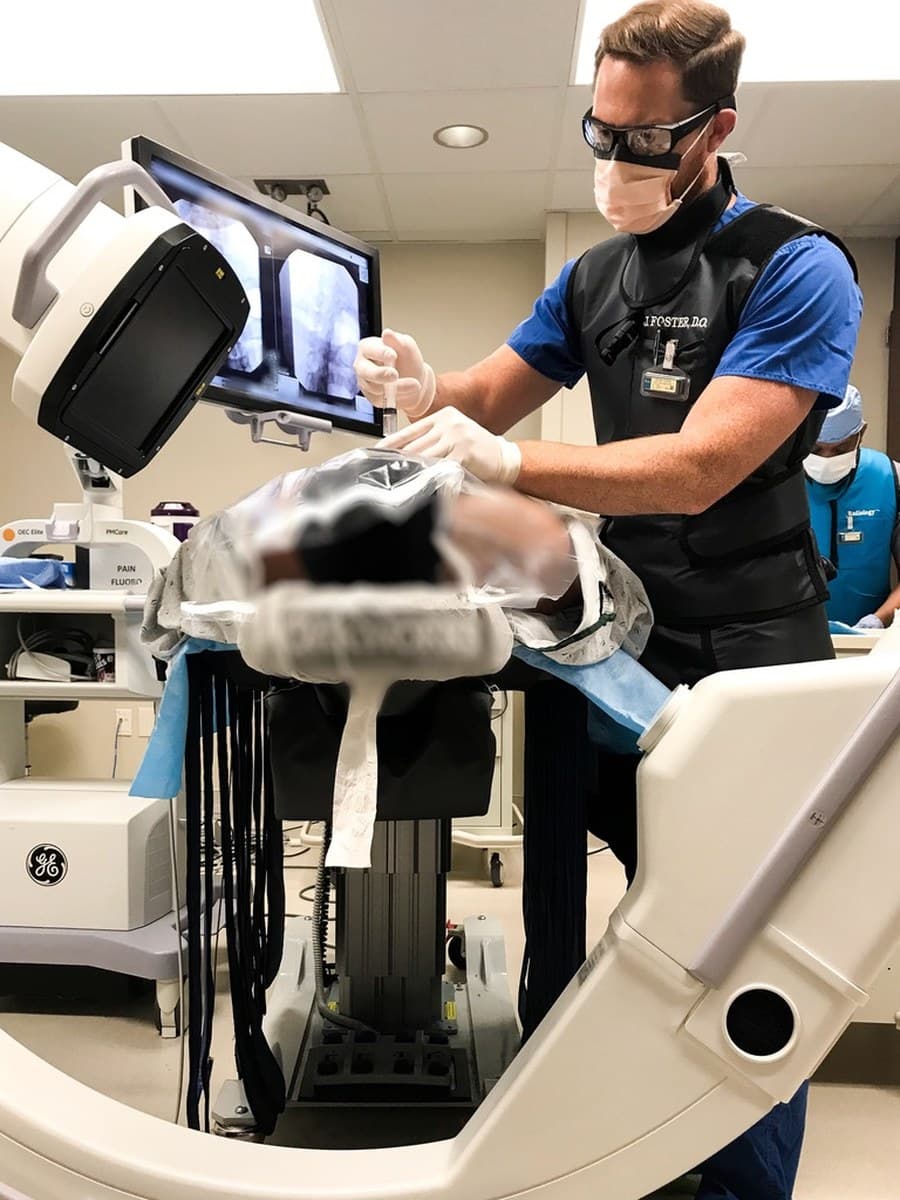
Dr. Foster works from the same diagnostic-first framework with every referral: confirm the specific pain generator before recommending a treatment plan, and communicate clearly back to the referring provider about findings and plan. Below is practical guidance on when a referral makes sense, an overview of procedure indications, and how to start the process.

When to Refer
One question is enough to decide.
If a patient's pain isn't improving with conservative care, that's the referral.
You don't need to land on the exact diagnosis first, or decide which specific procedure might apply — that's what the evaluation here is for. If a reasonable trial of conservative care hasn't controlled the pain, there's probably a more targeted option, and that alone is reason enough to send the patient.
This applies broadly
- Spine — axial or radicular back and neck pain, stenosis, vertebrogenic pain, post-surgical spine pain
- Joint & Structural — osteoarthritis, chronic tendinopathy, SI joint pain
- Complex or Refractory — CRPS, neuropathic pain, persistent post-surgical pain, patients on long-term opioid therapy
Procedure Indications
A quick-reference overview
Full clinical detail, including candidacy and evidence, is available on each treatment's dedicated page.
Diagnostic & Therapeutic Injections
Epidural steroid injections, peripheral nerve blocks, SI joint injections, and sympathetic nerve blocks — for confirming a suspected pain generator and providing direct relief.
Radiofrequency & Nerve Ablation
Medial branch block and RFA for confirmed facet-mediated pain, peripheral nerve ablation, and basivertebral nerve ablation (Intracept) for confirmed vertebrogenic pain.
Neuromodulation
Spinal cord stimulation, DRG stimulation, peripheral nerve stimulation, restorative neuromodulation (ReActiv8), and intrathecal pain pumps — for refractory pain that hasn't responded to more conservative interventional options.
Vertebral Augmentation
Kyphoplasty, SpineJack, and sacroplasty for acute, painful vertebral compression or sacral insufficiency fractures — outcomes are meaningfully better with earlier referral.
Minimally Invasive Spine Procedures
MILD and interspinous spacers for lumbar spinal stenosis, and SI joint fusion for confirmed, structurally dysfunctional SI joints that haven't responded to injection-based care.
Regenerative Medicine
PRP and intradiscal biologic treatment (ViaDisc) for select tendon, joint, and disc presentations, and Tenex for chronic, structurally damaged tendon tissue.
Academic Engagement
Training background relevant to referral decisions
Dr. Foster is fellowship-trained in Interventional Pain Medicine at the University of Kansas Medical Center and board-certified in both anesthesiology and the pain medicine subspecialty. Beyond clinical practice, he has held faculty appointments at Kansas City University (KCU) and the University of Missouri–Kansas City (UMKC), and is actively involved in training interventional pain physicians — including didactic instruction, cadaver lab training, proctoring, and mentorship in spinal cord stimulation, sacroiliac joint fusion, and peripheral nerve stimulation.
He also contributes to the published literature in interventional pain medicine, particularly in SI joint fusion and spinal cord stimulation. View his full research and publication record →
Referral Process
How to send a referral
To help route the referral efficiently, please include the working diagnosis or clinical question, relevant imaging and reports, and a summary of treatment already tried.
For full location details, including the hospital and ambulatory surgery center where procedures are performed, or to send a message directly, visit the Contact page →
Have a patient you'd like to discuss before referring?
Reach out directly — provider-to-provider conversations about a specific case are always welcome.