
Philosophy
How We Build Your Plan
Every recommendation in this practice follows the same five questions — not a script, but a discipline. The goal at the end of that process was never just a lower number on a pain scale. It's helping you move confidently toward the life you want to live, with a plan you actually understand and trust.
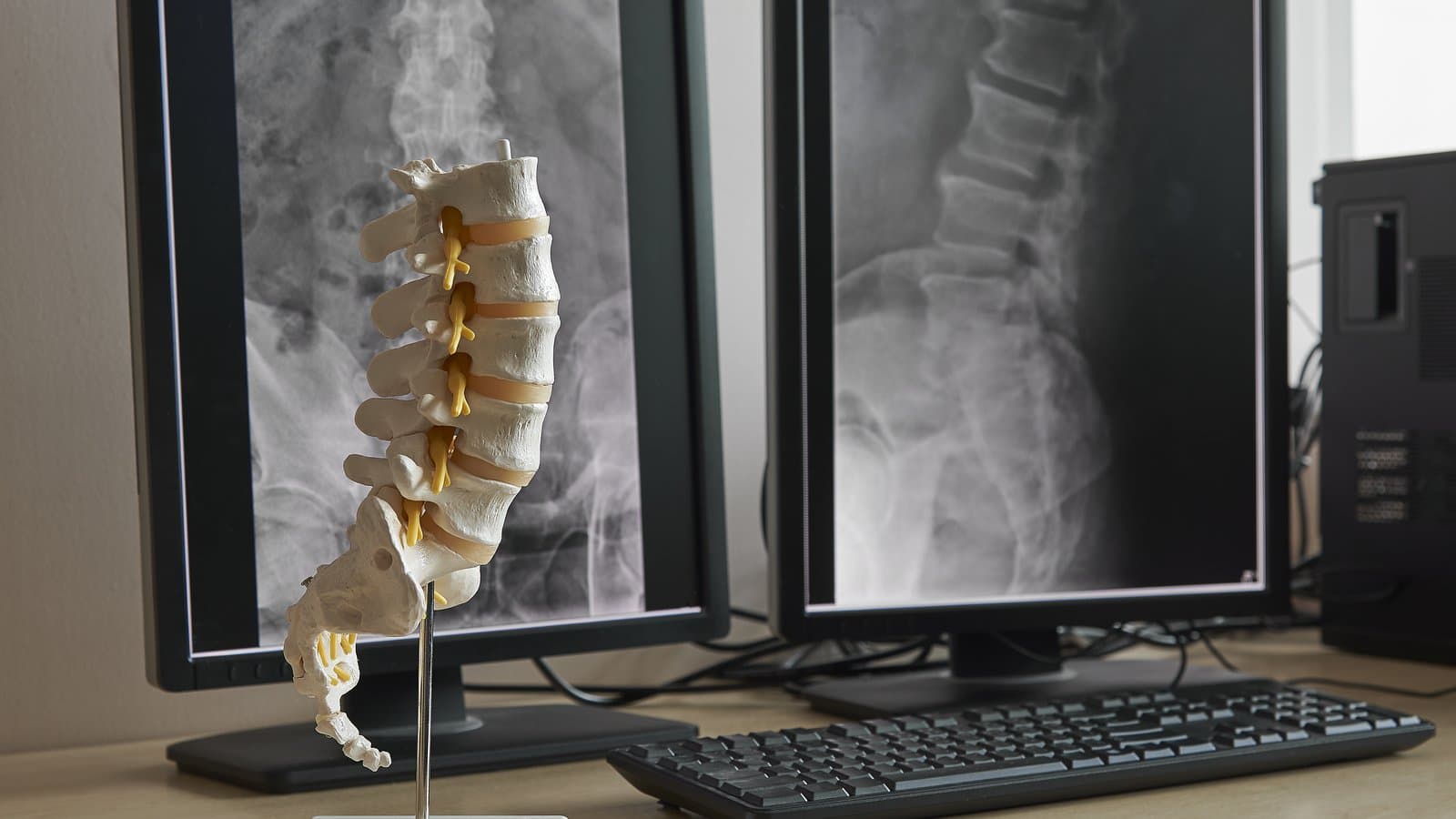
The Framework
A Framework for Every Decision
This is the same structure you'll see on every Condition and Treatment page on this site — here it is laid out as a standalone approach, not tied to one diagnosis.
What's the diagnosis?
Not a scan finding, not a guess — the specific structure or nerve actually generating your pain, confirmed through history, exam, and, when needed, a diagnostic injection that tests the hypothesis directly rather than assuming it.
What's the mechanism?
Why that structure is producing pain in the first place. A treatment aimed at the wrong mechanism doesn't work no matter how well it's performed, so this step is what makes the rest of the plan make sense.
What are the options?
The realistic range of paths forward, from conservative care through the most invasive procedure that could reasonably apply — laid out honestly, not narrowed to whatever's most convenient to offer.
Why this approach?
The specific reasoning connecting your diagnosis to a recommendation — so you understand why this option, for you, rather than being handed a plan and asked to trust it on faith.
What are the tradeoffs?
What you actually gain, what you give up, and how confident we can be in either. No procedure is free of downside, and pretending otherwise isn't respect — it's a shortcut.
Why precise diagnosis comes before any treatment discussion
It's tempting to skip straight to "what can we try" — especially when pain has already gone on too long. But a treatment aimed at the wrong pain generator doesn't just fail to help; it costs time, money, and hope that a targeted approach could have used more wisely. Getting the diagnosis right first is what makes everything after it actually work.
That's also what it means to anticipate a patient's situation rather than reach for a generic protocol: no two people arrive with the same combination of history, anatomy, and goals, so the diagnostic process has to be specific to you before the plan can be.
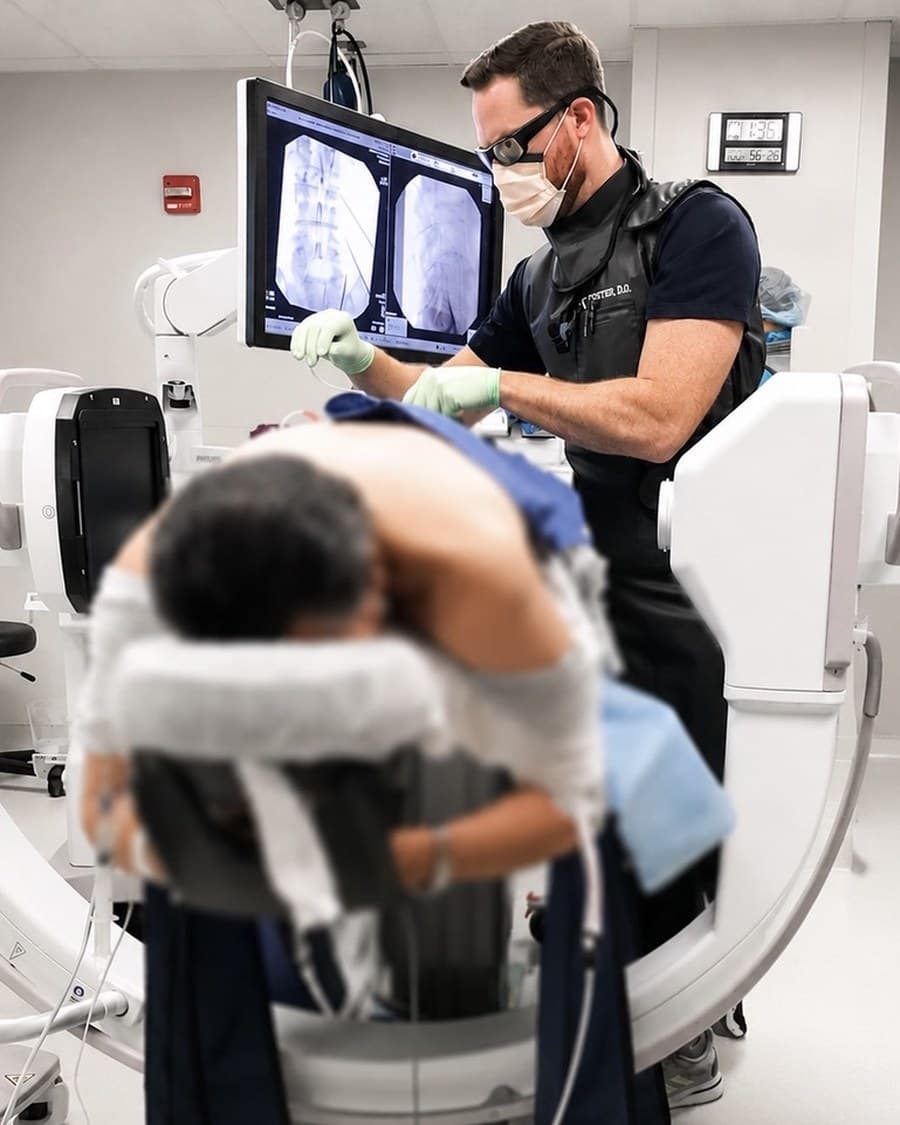
Grounded in the Literature
His clinical reasoning is built on research he has helped shape.
Dr. Foster's recommendations aren't just informed by bedside experience — they're grounded in the academic literature he actively contributes to, particularly in two of the fastest-evolving areas of interventional pain medicine.
Spinal Cord Stimulation (SCS)
Dr. Foster's academic and clinical work in spinal cord stimulation focuses on refining patient selection — identifying which patients are most likely to see durable, meaningful improvement in function, not just a short-term change in pain scores — and on how newer stimulation paradigms compare in real-world outcomes. This is the subject of his published multicenter case series on 10 kHz stimulation for chronic thoracic pain.
Sayed D, Foster JM, Nairizi A, Sills S, Miller A. Pain Physician. 2020;23(4):E369-E376. →Sacroiliac Joint (SI Joint) Fusion
His interest in sacroiliac joint disease reflects a broader shift in the field: recognizing the SI joint as a frequently under-diagnosed source of low back pain, and applying rigorous, evidence-based criteria — rather than anecdote — before recommending a fusion procedure, as detailed in his published work on minimally invasive fusion technique.
Weisbein D, et al. (Foster JM, co-author). PM&R. 2026;1-10. →Lynch PJ, Tubic G, Foster JM, Puri S, Burnette CA, Block JE. Orthop Res Rev. 2022;14:429-435. →That grounding matters in the exam room: when Dr. Foster recommends spinal cord stimulation or SI joint fusion, it's a decision informed by the same literature he has helped contribute to, applied carefully to the specifics of your case.

Where Tradeoffs Meet Your Goals
The outcome that matters isn't a number on a pain scale.
Every treatment on this site is discussed in terms of real tradeoffs — what it offers, what the risks are, how confident the evidence is. But tradeoffs only mean something in the context of what you're actually trying to get back: sitting through a full workday without watching the clock, picking up a grandchild, getting through a round of golf, sleeping through the night. That specific goal — not a generic target — is what a recommendation gets weighed against.
That's also why "pain-free" isn't the promise here. Some conditions respond well enough that pain becomes a minor afterthought; others are managed rather than cured. In both cases, the actual goal is the same: helping you feel confident in your body again, and in control of where things go from here — not a number, a feeling.
Where It Comes From
A bioethics background, applied to every conversation
Before medical school, Dr. Foster earned a Master's degree in Bioethics — time spent studying how good decisions actually get made in medicine, especially when the "right" answer isn't obvious. That background shows up directly in this framework: less about presenting a single recommended procedure, and more about walking through the options, the evidence, and the tradeoffs together, so the final decision is genuinely a shared one. Read more about his background →
Want to talk through what this looks like for your specific situation?
Every patient starts with the same five questions — asked about your history, your anatomy, and your goals, not a generic script.