
Conditions · Spine & Disc
Vertebrogenic Pain
Vertebrogenic pain is chronic low back pain driven by the vertebral endplate itself and the basivertebral nerve that carries its pain signal — a distinct pain generator from the disc or facet joints, and one that's frequently under-recognized.
Understanding Vertebrogenic Pain
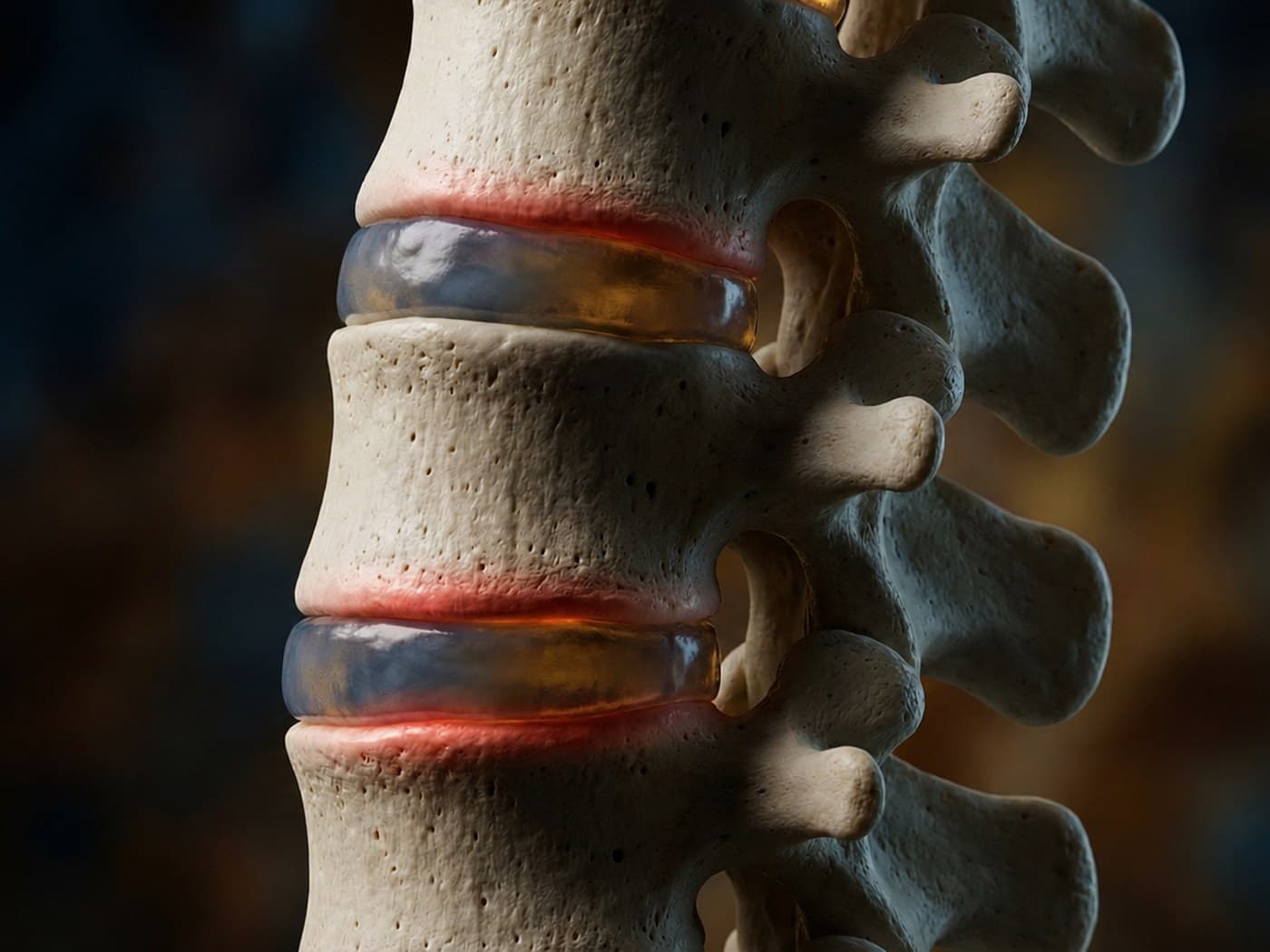
The vertebral endplate — the cartilage-covered surface at the top and bottom of each vertebral body — can develop inflammatory or fatty marrow changes visible on MRI, known as Modic changes. When the endplate is damaged or inflamed this way, the basivertebral nerve running through the center of the vertebral body transmits that as pain, distinct from the disc's outer annulus or the facet joints behind it.
The pattern is typically chronic, central low back pain — often worse with sitting, bending, or prolonged standing — in a patient whose MRI shows Modic type 1 or 2 changes at the level of pain.
Care Pathway
How treatment typically progresses
Start with Conservative Care
Medications
Physical Therapy & Exercise
Activity & Behavior Modifications
If Conservative Care Isn't Enough
Basivertebral Nerve Ablation (Intracept)
Unlike some conditions here, vertebrogenic pain doesn't have a long interventional ladder to climb. Once correctly diagnosed via Modic changes, basivertebral nerve ablation is often the primary and sufficient interventional step, rather than one of several options to work through in sequence.
How We Build Your Plan
The clinical reasoning behind this recommendation
What's the diagnosis?
Chronic axial low back pain, typically present for six months or more, correlated with MRI showing Modic type 1 or 2 changes at the corresponding vertebral endplate — a relatively specific imaging marker compared to some other diagnoses, though clinical correlation with symptoms still matters.
What's the mechanism?
The vertebral endplate, when damaged or inflamed — reflected as Modic changes on MRI — becomes a pain generator transmitted via the basivertebral nerve running through the center of the vertebral body, a distinct pathway from the disc's outer annulus or the facet joints.
What are the options?
Conservative care as a reasonable step, though many patients have already tried extensive conservative treatment by the time this diagnosis is considered; basivertebral nerve ablation for confirmed cases with matching Modic changes and appropriate symptom duration.
Why this approach?
Modic changes on MRI are a relatively specific marker for this particular pain generator, and clinical trial evidence for basivertebral nerve ablation is focused specifically on this patient population — matching the imaging finding to the procedure is central to whether it's likely to help.
What are the tradeoffs?
Basivertebral nerve ablation offers durable relief without repeat treatment for many patients — a genuine advantage over some cyclical interventional options — but appropriate patient selection, including confirmed Modic changes and ruling out other pain generators, is what determines whether that benefit is actually realized.
Prognosis
Chronic by nature — but often a single, durable fix once correctly diagnosed
Vertebrogenic pain comes from structural changes in the vertebral endplate that don't reverse on their own, so it's a chronic condition rather than one that resolves with time alone. But unlike some chronic conditions that require ongoing, repeat treatment, basivertebral nerve ablation can offer durable, often long-lasting relief from a single procedure in well-selected patients. The key factor is correctly identifying it as the pain generator in the first place — it's often conflated with generic "nonspecific" low back pain, which is exactly the gap this diagnosis was defined to close.
Related Treatments
Treatment options for this condition
Sources & Further Reading⌄
- Rahme R, Moussa R. "The Modic Vertebral Endplate and Marrow Changes: Pathologic Significance and Relation to Low Back Pain and Segmental Instability of the Lumbar Spine." AJNR Am J Neuroradiol. 2008;29(5):838-842. This research establishes Modic type 1 and type 2 vertebral endplate changes on MRI as correlating with active low back pain symptoms, the imaging marker that later basivertebral-nerve-ablation research used to define the vertebrogenic pain population — distinguishing it from disc- or facet-mediated back pain. View source →
- Fischgrund JS, Rhyne A, Franke J, et al. "Intraosseous basivertebral nerve ablation for the treatment of chronic low back pain: a prospective randomized double-blind sham-controlled multi-center study." Eur Spine J. 2018;27(5):1146-1156 (the SMART trial). This pivotal sham-controlled RCT demonstrated durable improvement in pain and function for patients with confirmed Modic changes, representing a focused, well-studied application of radiofrequency ablation to this specific pain generator. View source →
Think this might describe your pain?
An accurate diagnosis starts with a conversation. Reach out to schedule a consultation.