
Treatments · Minimally Invasive Spine Procedures
Interspinous Spacers
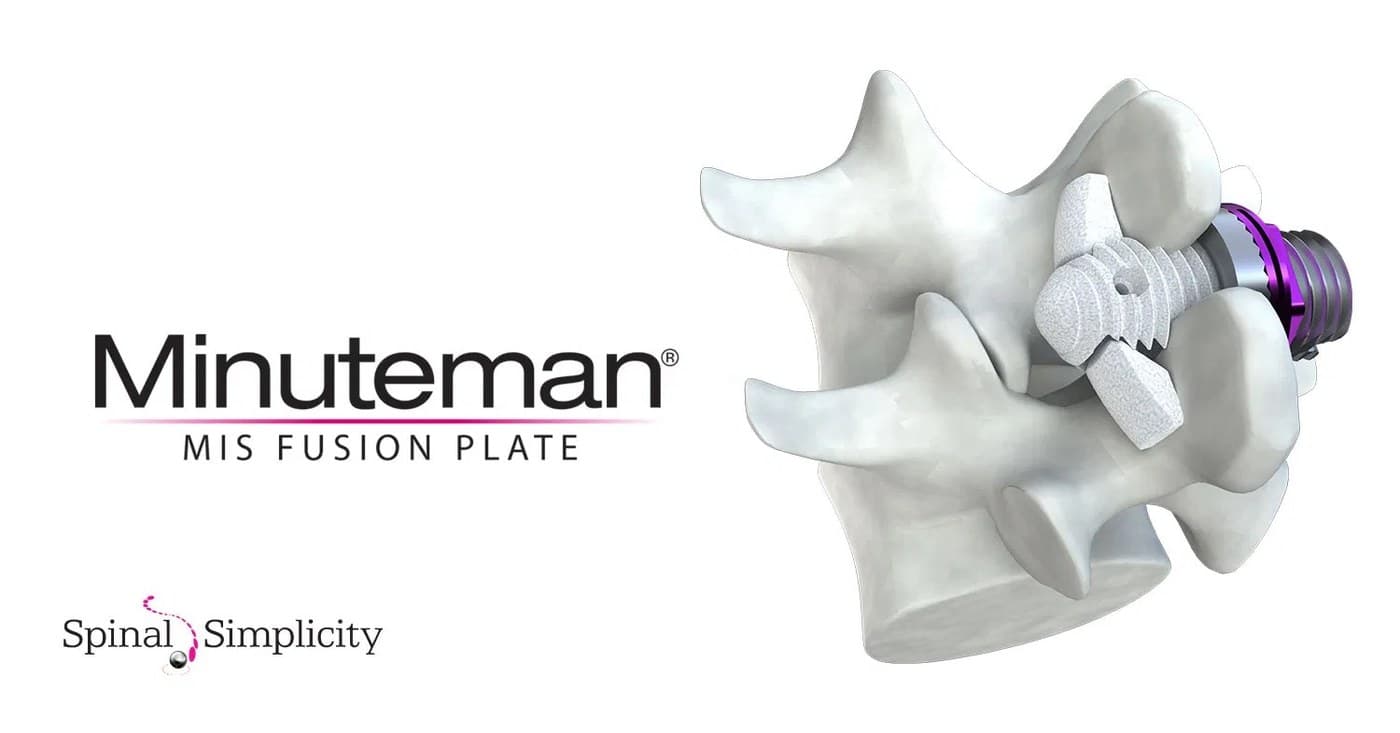
Small implants — including Vertiflex/Superion and Minuteman systems — placed between the spinous processes to hold open extra space and relieve stenosis-related nerve compression during standing and walking.
What it involves
Spinal stenosis symptoms characteristically worsen with standing and walking, because extending the spine in that position narrows the canal further. An interspinous spacer is a small implant placed between two adjacent spinous processes — the bony points felt along the back of the spine — that mechanically limits how far the segment can extend, preserving more canal space in the position that would otherwise provoke symptoms.
The procedure is done through a small incision under fluoroscopic guidance, without removing any bone or ligament tissue — the implant itself, not tissue removal, is what creates the additional space.
How it works
By limiting extension at the treated level, the spacer keeps the canal from narrowing as much during standing and walking — directly addressing the position-dependent mechanism behind neurogenic claudication. This is a different approach than MILD, which removes excess ligament tissue rather than limiting motion with an implant; the right choice between the two depends on the specific pattern and source of a patient's stenosis.
Candidates are patients with stenosis symptoms that specifically improve with flexion (sitting, leaning forward) — confirming that extension-related narrowing is the mechanism driving symptoms, and that limiting extension is likely to help.
How We Build Your Plan
The clinical reasoning behind this recommendation
What's the diagnosis?
MRI-confirmed lumbar spinal stenosis with a classic pattern of symptoms worsening with standing or walking and improving with sitting or forward flexion, confirming an extension-dependent mechanism.
What's the mechanism?
The implant limits extension at the treated spinal segment, preserving canal space in the position that would otherwise narrow it and compress the nerves — a mechanical solution matched directly to a mechanical, position-dependent problem.
What are the options?
Conservative care and epidural steroid injections remain the first steps; an interspinous spacer is considered for appropriate candidates with extension-dependent symptoms, as an alternative or complement to MILD depending on the specific stenosis pattern.
Why this approach?
Because the spacer works by limiting a specific motion rather than removing tissue, Dr. Foster reserves it for patients whose symptom pattern clearly confirms that extension is the mechanism driving their stenosis symptoms.
What are the tradeoffs?
Interspinous spacers are less invasive than open decompression and preserve the option for further treatment later, but they're implants — with the small, associated risks any implant carries — and are suited to a specific symptom pattern rather than every presentation of stenosis.
What to Expect
An outpatient procedure with a brief recovery
The procedure typically takes about 30 to 45 minutes and is done on an outpatient basis through a small incision, with local anesthesia and light sedation.
Most patients notice some soreness at the incision site for a few days, with a gradual return to normal activity over the following weeks. Because the implant works mechanically, many patients notice improvement in their walking tolerance relatively quickly once initial soreness resolves.
For more information about interspinous spacers, visit the manufacturer's official resource: Spinal Simplicity Minuteman.
Notice your leg symptoms ease when you sit or lean forward?
An accurate diagnosis starts with a conversation. Reach out to schedule a consultation.