
Conditions · Spine & Disc
Spinal Stenosis
Spinal stenosis is a narrowing of the space around the spinal cord or nerve roots, most often from age-related degenerative changes. The hallmark symptom is leg heaviness, cramping, or pain that builds with standing or walking and eases when you sit down or lean forward.
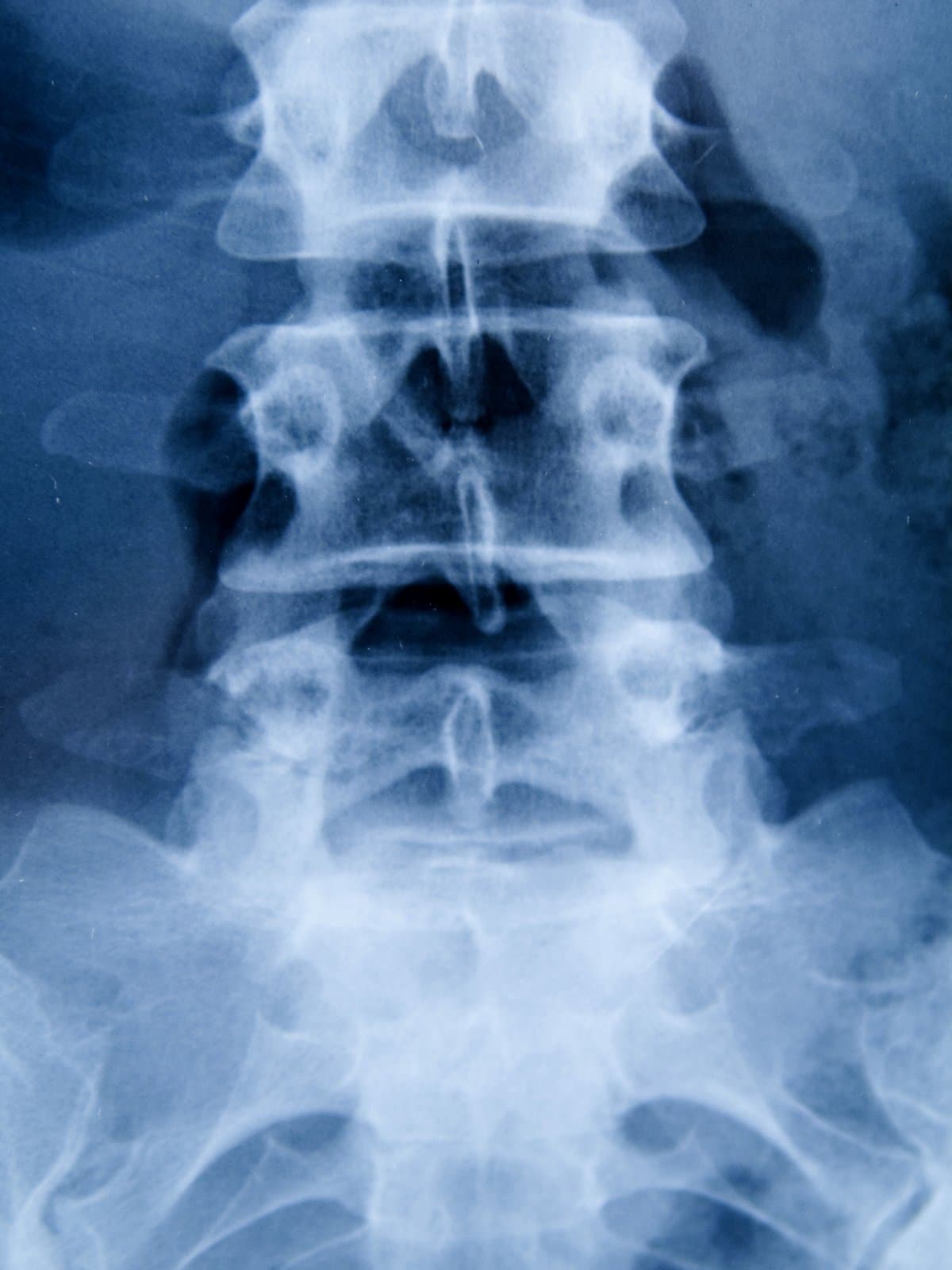
Understanding Spinal Stenosis
As the spine ages, thickened ligaments, bulging discs, and enlarged facet joints can gradually narrow the canal that houses the spinal cord and nerve roots. When that space gets tight enough, it compresses the nerves — but only in certain positions. Standing and walking naturally extend the spine, narrowing the canal further, which is exactly when symptoms tend to appear.
This produces a distinct pattern known as neurogenic claudication: legs that feel heavy, weak, or crampy after walking a certain distance, relieved within minutes of sitting down or leaning forward — often described as the "shopping cart sign," since leaning on a cart provides the same relief.
Care Pathway
How treatment typically progresses
Start with Conservative Care
Medications
Physical Therapy & Exercise
Activity & Behavior Modifications
If Conservative Care Isn't Enough
Epidural Steroid Injections
Minimally Invasive Lumbar Decompression (MILD)
Interspinous Spacers
Where Regenerative Treatment Fits
Surgical Decompression
This progression assumes a typical, gradually-developing case. Severe or rapidly progressing symptoms — especially with weakness or neurological changes — warrant a faster path to a surgical opinion, not a delay while working through each step in order.
How We Build Your Plan
The clinical reasoning behind this recommendation
What's the diagnosis?
A symptom pattern of leg heaviness or cramping that builds with standing and walking and eases with sitting or forward flexion, correlated with MRI findings of canal narrowing at the matching level — with vascular causes ruled out.
What's the mechanism?
Degenerative changes — thickened ligament, disc bulging, enlarged facet joints — narrow the available space for the nerves. Extending the spine (standing upright, walking) narrows that space further, while flexing forward opens it back up, which is exactly why posture changes your symptoms so predictably.
What are the options?
Flexion-based physical therapy and activity modification, medication, epidural steroid injections, minimally invasive decompression (MILD), interspinous spacers, or — for severe or progressive cases — surgical decompression.
Why this approach?
Because the mechanical relationship between posture and canal space is so consistent, the treatment approach follows that same logic: start with what opens the canal non-invasively, add targeted injections or minimally invasive decompression for appropriate candidates, and move more quickly to a surgical opinion when there's a significant or progressive neurological deficit rather than working through every intermediate step regardless of severity.
What are the tradeoffs?
Minimally invasive options like MILD and interspinous spacers work well for a specific group of patients — typically mild-to-moderate central stenosis without significant instability — and don't rule out surgery later if needed. Surgical decompression is more definitive for severe stenosis but carries the larger risk profile and recovery of open surgery, so it's reserved for the patients who actually need that level of intervention.
Prognosis
A chronic, progressive condition — but a very manageable one
Spinal stenosis comes from structural narrowing that develops gradually over years, and it typically doesn't reverse on its own — this is generally a chronic, slowly progressive condition rather than one that resolves. That said, "progressive" doesn't mean unmanageable: many patients maintain good function for years with conservative care and, when needed, minimally invasive treatment. A smaller group with severe or worsening nerve involvement will eventually need surgical decompression — which, for that group, is a genuinely definitive fix rather than just another step. Most patients do well managing this over time, with a real surgical option held in reserve for the cases that need it.
Related Treatments
Treatment options for this condition
Sources & Further Reading⌄
- Kreiner DS, Shaffer WO, Baisden JL, et al. "An evidence-based clinical guideline for the diagnosis and treatment of degenerative lumbar spinal stenosis (update)." Spine J. 2013;13(7):734-743 (North American Spine Society). This guideline supports a stepped approach beginning with non-surgical care for most patients who don't have a significant or progressive neurological deficit. View source →
- Comer C, Williamson E, McIlroy S, et al. "Exercise treatments for lumbar spinal stenosis: A systematic review and intervention component analysis of randomised controlled trials." Clin Rehabil. 2024;38(3). Flexion-based exercise is a common component of successful stenosis exercise programs (present in 74% of studied interventions), typically combined with stretching, strengthening, or cycling — flexion increases the available space within the spinal canal, though the review found benefit was clearest for the combined approach rather than flexion positioning alone. View source →
- Armon C, Narayanaswami P, Potrebic S, et al. "Epidural Steroids for Cervical and Lumbar Radicular Pain and Spinal Stenosis Systematic Review Summary: Report of the AAN Guidelines Subcommittee." Neurology. 2025;104(5):e213361. This current American Academy of Neurology guideline found epidural steroid injections only possibly reduce disability from spinal stenosis, with insufficient evidence for a pain benefit — in contrast to the small, short-term benefit seen for radiculopathy — supporting a cautious framing of stenosis-related injections as, at best, temporary symptomatic relief rather than a structural fix. View source →
Think this might describe your pain?
An accurate diagnosis starts with a conversation. Reach out to schedule a consultation.