
Treatments · Radiofrequency & Nerve Ablation
Peripheral Nerve Ablation
Radiofrequency ablation applied to a specific peripheral nerve outside the spine — once a diagnostic block confirms candidacy — for longer-lasting relief than a block alone.
What it involves
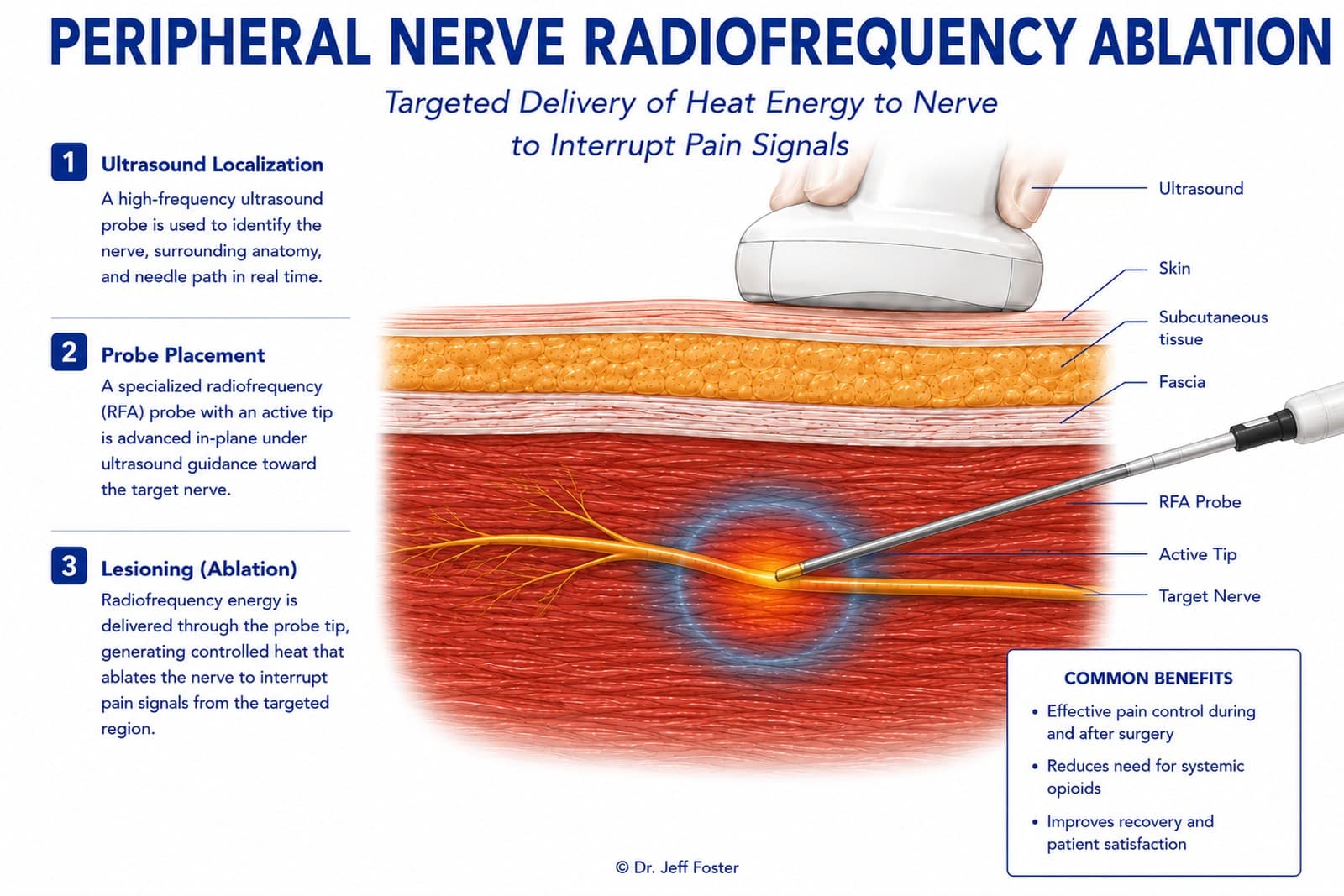
Peripheral nerve ablation applies radiofrequency energy to a specific peripheral nerve — one already confirmed as a patient's pain generator through a diagnostic block. Under image guidance, a specialized needle is positioned directly along the nerve, and radiofrequency energy is delivered to disable its ability to transmit pain signals.
This is distinct from medial branch RFA, which targets the small nerves specifically supplying the spine's facet joints, and from a peripheral nerve block, which is primarily diagnostic and short-acting. Peripheral nerve ablation is reserved for a confirmed peripheral, non-spinal nerve pain generator — common examples include the genicular nerves around the knee, or nerves involved in a post-surgical neuroma.
How it works
Radiofrequency energy heats the targeted nerve enough to disrupt its ability to carry pain signals, without the temporary, anesthetic-only effect of a block. Relief typically builds over one to three weeks and can last many months to over a year — meaningfully longer than the hours of relief a diagnostic block provides.
Because peripheral nerves can gradually regenerate over time, relief isn't always permanent, and the procedure can sometimes be repeated if the nerve is reconfirmed as the pain generator and relief has worn off.
How We Build Your Plan
The clinical reasoning behind this recommendation
What's the diagnosis?
A peripheral nerve pain generator confirmed by a diagnostic block with substantial, reproducible relief — the same nerve, the same distribution, and most importantly, a clear response before moving to ablation.
What's the mechanism?
Radiofrequency energy delivered through a needle positioned directly along the confirmed nerve disables its ability to transmit pain signals, providing longer-lasting relief than the temporary anesthetic effect of a block alone.
What are the options?
This is distinct from medial branch RFA, which targets small nerves specifically supplying the spine's facet joints, and from a peripheral nerve block, which is primarily diagnostic and short-acting — peripheral nerve ablation is reserved for a confirmed peripheral, non-spinal nerve pain generator.
Why this approach?
Dr. Foster moves to ablation only after a diagnostic block confirms the specific nerve responsible, ensuring the more durable procedure is applied precisely where it's likely to work rather than as a broader, less targeted intervention.
What are the tradeoffs?
Ablation offers meaningfully longer relief than a block — often months — but nerves can regenerate over time, meaning relief isn't always permanent and the procedure can sometimes be repeated. It's a bigger step than a diagnostic block, reserved for patients who've already shown a clear, reproducible response.
What to Expect
Outpatient, with relief that builds over a few weeks
The ablation itself typically takes about 15 minutes and is done on an outpatient basis under image guidance, with mild soreness at the needle site for a few days afterward. Some patients briefly notice increased discomfort in the days right after treatment — a known, temporary phenomenon sometimes called post-ablation neuritis — before relief sets in.
Meaningful pain relief typically builds over one to three weeks as the nerve settles, and effects can last many months to over a year. If relief wanes and the nerve is reconfirmed as the pain generator, the procedure can be repeated.
Conditions This Treats
Conditions this treatment addresses
Already had a diagnostic block with good relief?
Ablation may be the right next step. Reach out to schedule a consultation.