
Treatments · Soft Tissue & Regenerative Medicine
Intradiscal Treatments (ViaDisc)
A biologic injection delivered directly into the intervertebral disc, intended to support disc health in carefully selected patients with early discogenic pain.
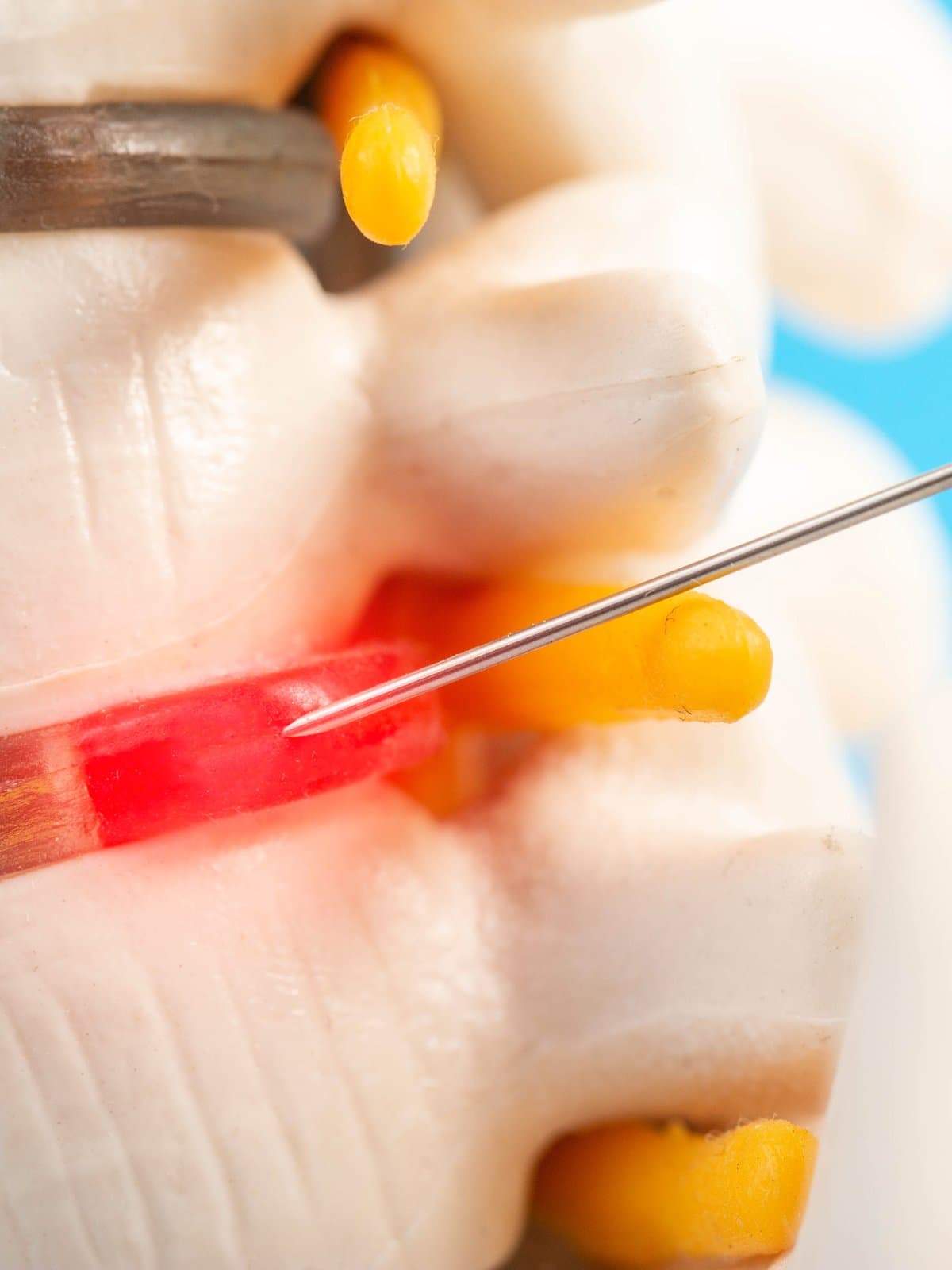
What it involves
A biologic allograft material — donor tissue processed specifically for this purpose — is injected directly into the nucleus of the affected disc under fluoroscopic guidance, aiming to supplement the disc's own nucleus pulposus tissue. This is a targeted, single-level procedure reserved for a specific, carefully diagnosed disc, not a general treatment for back pain broadly.
Candidacy depends on confirming the disc itself — not a nerve root or facet joint — as the actual pain generator, typically through the same diagnostic process used for other discogenic pain treatment: history, exam, imaging, and, when the picture remains unclear, an anesthetic discogram.
How it works
The intervertebral disc has limited capacity to heal itself, given its poor blood supply — once the annulus is torn or the nucleus degenerates, the disc typically doesn't regenerate on its own. Intradiscal biologic material aims to support the disc's structure and cellular environment directly, rather than simply managing the pain it produces.
This is a newer, more selectively studied area of interventional pain medicine than established procedures like epidural steroid injections or radiofrequency ablation. The evidence base is real but still developing, which is why Dr. Foster reserves it for carefully selected, early-stage cases rather than positioning it as a routine option.
How We Build Your Plan
The clinical reasoning behind this recommendation
What's the diagnosis?
A confirmed disc-origin pain generator at a specific level — through history, exam, MRI, and, when needed, an anesthetic discogram — distinguishing it from facet or nerve-root-mediated pain, which wouldn't respond to a disc-targeted treatment.
What's the mechanism?
Biologic material delivered directly into the disc's nucleus aims to support its structure and cellular environment, addressing the tissue itself rather than simply calming the inflammation or pain signal it generates.
What are the options?
Conservative care and, where appropriate, epidural steroid injections remain the first steps; intradiscal biologic treatment is considered for carefully selected, early-stage discogenic pain that hasn't resolved with those options, before more invasive procedures are considered.
Why this approach?
Because the evidence base here is newer and narrower than for more established interventional procedures, Dr. Foster is selective about candidacy — matching the treatment to patients where the diagnosis is clear and the disc changes are early enough that supporting the tissue is still a reasonable goal.
What are the tradeoffs?
This treatment targets the disc directly rather than simply managing symptoms around it, which is appealing — but the evidence base is narrower than for more established options, so candidacy is more selective and expectations need to be realistic about what current research actually supports.
What to Expect
An outpatient procedure with a gradual, measured response
The injection itself typically takes about 20 to 30 minutes, done under fluoroscopic guidance on an outpatient basis. Because the procedure involves entering the disc itself, it's performed with the same careful, sterile technique used for a diagnostic discogram.
This is not a treatment with immediate relief — as a biologic approach aimed at supporting tissue over time, meaningful improvement, when it occurs, typically builds gradually over the following weeks to months rather than appearing right away. Activity is generally limited for a short period afterward to protect the treated disc.
Think discogenic pain might describe your symptoms?
An accurate diagnosis starts with a conversation. Reach out to schedule a consultation.