
Treatments · Diagnostic & Therapeutic Injections
Epidural Steroid Injections
A targeted injection of anti-inflammatory corticosteroid, delivered directly into the epidural space, to calm an irritated or compressed nerve root and reduce pain radiating from the spine.
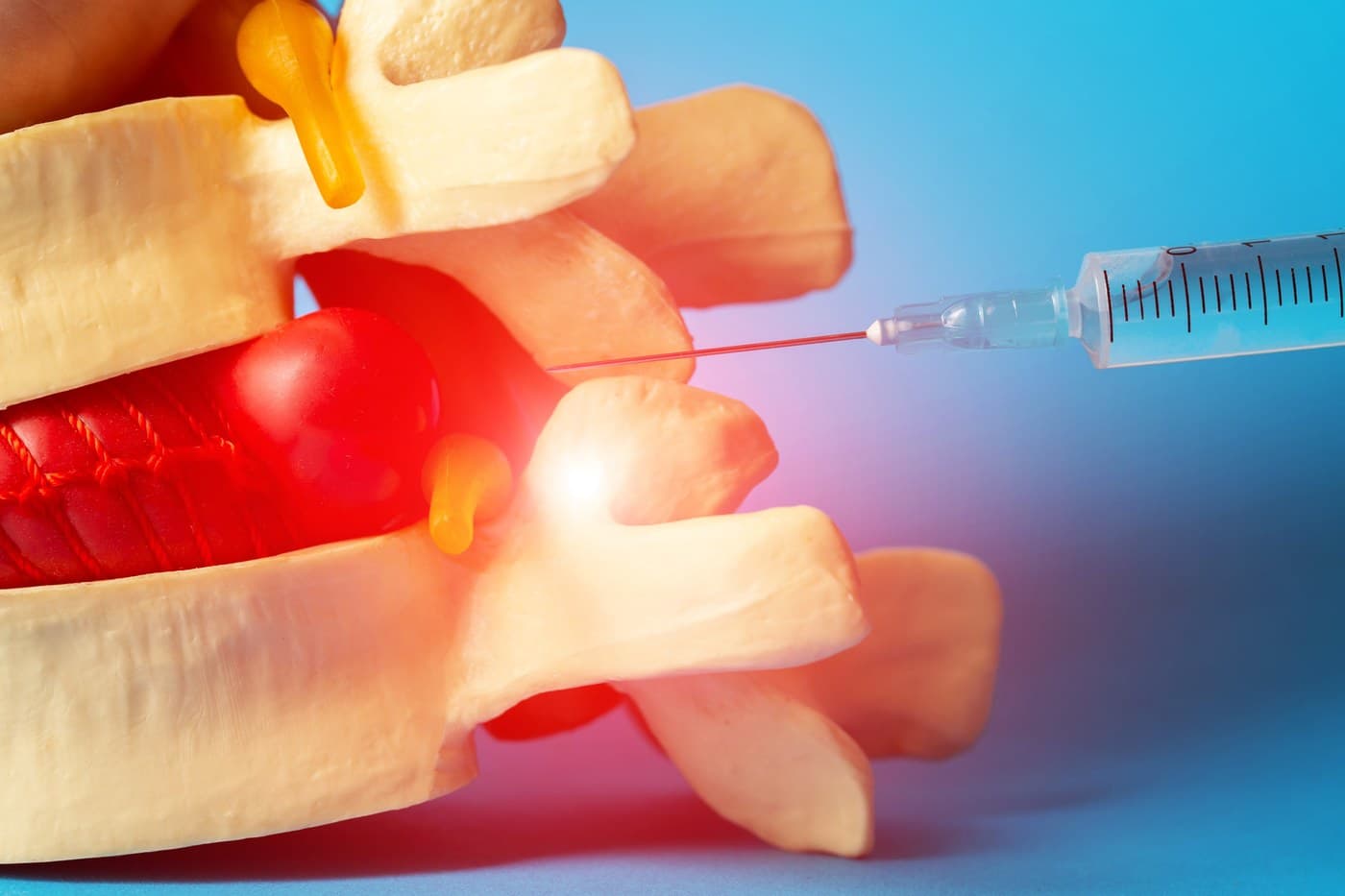
What it involves
The epidural space is the area surrounding the spinal cord and nerve roots, running the length of the spine. In an epidural steroid injection, a corticosteroid — often combined with a local anesthetic — is delivered directly into that space, under fluoroscopic (X-ray) guidance, at the level matching a patient's symptoms and imaging findings.
Depending on the specific level, laterality, and pain generator involved, Dr. Foster uses one of three approaches: interlaminar (between the vertebral laminae), transforaminal (through the nerve root foramen, allowing the most targeted placement), or caudal (through the sacral hiatus). Contrast dye confirms correct needle placement before medication is injected.
How it works
Corticosteroid delivered directly into the epidural space reduces local inflammation and swelling around an irritated nerve root — calming the pain signal at its source rather than masking it systemically the way an oral medication would. The evidence base is strongest for radicular pain — pain radiating along a specific nerve root distribution — from a herniated disc or foraminal narrowing.
Reducing that inflammation often creates a window of meaningfully reduced pain, which matters beyond the injection itself: it frequently makes physical therapy more productive, since patients can participate more fully in strengthening and mobility work while the nerve root has a chance to settle.
How We Build Your Plan
The clinical reasoning behind this recommendation
What's the diagnosis?
A history and exam consistent with nerve root irritation, correlated with MRI findings — disc herniation, foraminal narrowing, or central stenosis — at a level that matches the patient's symptoms.
What's the mechanism?
Corticosteroid delivered directly into the epidural space reduces local inflammation and swelling around an irritated nerve root, addressing the source of the pain signal rather than covering it up systemically.
What are the options?
Interlaminar, transforaminal, and caudal approaches all reach the epidural space, but differently — the choice depends on the specific level, laterality, and pain generator involved, guided by fluoroscopy for precise placement.
Why this approach?
Dr. Foster selects the approach and level based on where the imaging and exam findings actually converge, aiming to deliver medication as close as possible to the true pain generator rather than defaulting to a generic injection.
What are the tradeoffs?
Relief is often significant but not always permanent — many patients get a meaningful window of reduced pain that makes therapy more effective, while others need a repeat injection or the next step in the care pathway. Corticosteroid injections are generally limited in frequency over a given period for safety.
What to Expect
A quick outpatient procedure with a short recovery
The injection itself — needle placement, contrast confirmation, and delivering the medication — typically takes about 5 minutes. Including positioning and setup, the full visit usually runs 15 to 30 minutes, done on an outpatient basis. Most patients notice some soreness at the injection site for a day or two, and it's common for meaningful relief to build over the following few days as the inflammation subsides rather than appearing instantly.
Normal activity can typically resume the same or next day. When effective, relief can last anywhere from several weeks to several months — long enough, in many cases, to make real progress with physical therapy before deciding whether further treatment is needed.
Conditions This Treats
Conditions this treatment addresses
Sources & Further Reading⌄
- Armon C, Narayanaswami P, Potrebic S, et al. "Epidural Steroids for Cervical and Lumbar Radicular Pain and Spinal Stenosis Systematic Review Summary: Report of the AAN Guidelines Subcommittee." Neurology. 2025;104(5):e213361. This current American Academy of Neurology guideline found epidural steroid injections have their strongest evidence base for radicular pain — pain radiating along a nerve root distribution from disc herniation or foraminal narrowing — probably reducing short-term pain and disability, with a more modest, insufficiently supported benefit specifically for spinal stenosis. View source →
Wondering if this is the right next step?
An accurate diagnosis starts with a conversation. Reach out to schedule a consultation.