
Treatments · Advanced Infusion Therapy
Ketamine Infusion Therapy
A monitored intravenous infusion reserved for select, complex chronic pain conditions — including CRPS — that haven't responded adequately to other interventional approaches.
What it involves
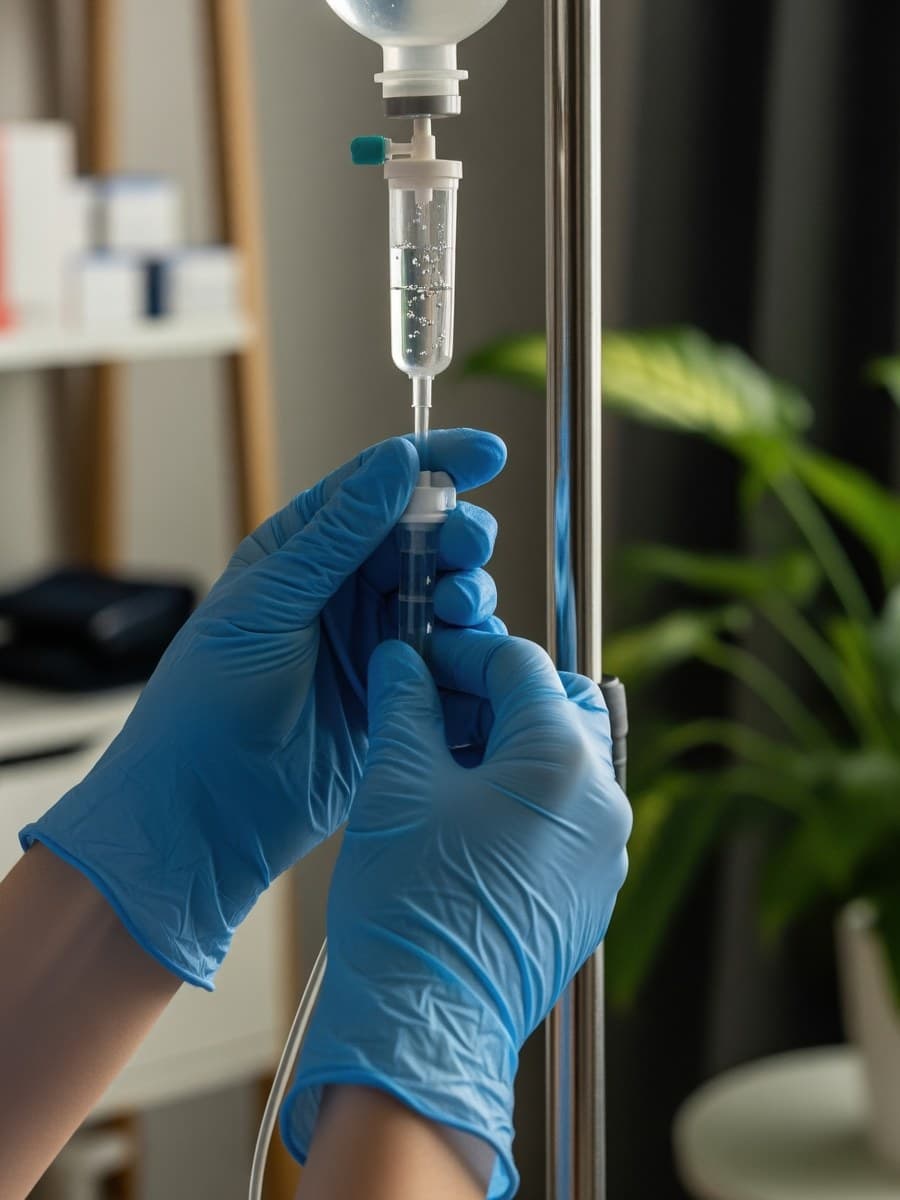
Ketamine is delivered as a slow intravenous infusion over several hours, in a monitored clinical setting with continuous observation of vital signs. Dosing for chronic pain is well below the level used for anesthesia, aimed at modulating pain processing rather than producing sedation.
This isn't a first-line or even a typical second-line option — it's reserved for select patients with severe, refractory pain, most often CRPS or other complex neuropathic pain conditions, who haven't gotten adequate relief from the more standard interventional options appropriate to their diagnosis.
How it works
Ketamine acts on NMDA receptors involved in the abnormal, amplified pain signaling seen in conditions like CRPS and severe neuropathic pain — a different mechanism than an opioid or a nerve block, targeting the central sensitization that makes these conditions so difficult to treat with more conventional approaches alone.
Response varies significantly by patient, and a single infusion doesn't typically produce lasting change — a short series of infusions is more common, with the specific protocol individualized based on how a patient responds.
How We Build Your Plan
The clinical reasoning behind this recommendation
What's the diagnosis?
Severe, refractory CRPS or complex neuropathic pain that hasn't responded adequately to the interventional options specifically appropriate to that diagnosis — sympathetic blocks and neuromodulation for CRPS, or neuropathic medication and nerve-targeted procedures for severe neuropathic pain.
What's the mechanism?
Ketamine acts on NMDA receptors involved in the abnormal, amplified central pain signaling that characterizes conditions like CRPS, addressing a different part of the pain pathway than a nerve block or standard neuromodulation.
What are the options?
A short series of monitored infusions, with the specific protocol and interval individualized based on response — considered only after more standard interventional options for the underlying condition haven't provided adequate relief.
Why this approach?
Because ketamine infusion requires monitored administration and isn't a first-line option for any condition it treats, Dr. Foster reserves it for select, more severe or treatment-resistant presentations rather than offering it broadly.
What are the tradeoffs?
Ketamine infusion can help patients with severe, refractory pain who haven't responded to other options, but it requires monitored administration in a clinical setting, response varies significantly by patient, and it's generally approached as part of a broader plan rather than a standalone fix.
What to Expect
A monitored infusion in a clinical setting
Each infusion typically takes several hours, done in a monitored setting with continuous observation of vital signs throughout. Patients need a driver, since the medication can cause temporary dissociative effects — feeling detached or unusually perceptive of surroundings — that resolve within hours of the infusion ending.
A short series of infusions, often spaced over consecutive days or weeks, is more typical than a single treatment. Response is tracked closely, and the plan is adjusted based on how much and how long relief lasts after each session.
Conditions This Treats
Conditions this treatment addresses
Living with severe CRPS or neuropathic pain that hasn't responded to other treatment?
An accurate diagnosis starts with a conversation. Reach out to schedule a consultation.