
Conditions · Nerve
Complex Regional Pain Syndrome (CRPS)
CRPS is a complex nerve condition, usually following an injury, marked by pain that's disproportionate to the original event — along with temperature and color changes, swelling, and heightened sensitivity in the affected limb.
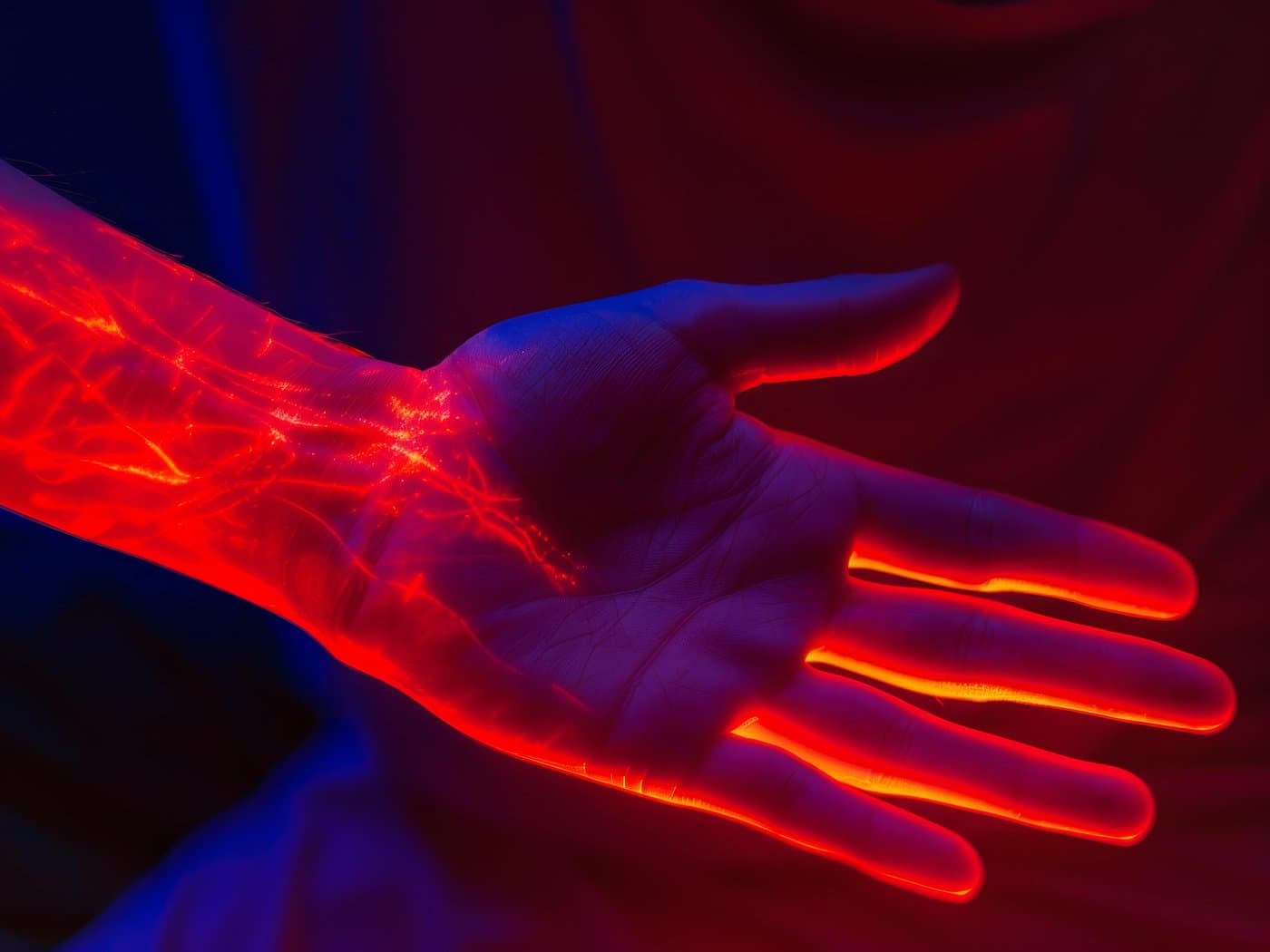
Understanding Complex Regional Pain Syndrome
CRPS typically develops after an injury — a fracture, surgery, or even a sprain — that would normally be expected to heal without lasting effects. Instead, the nervous system's response becomes amplified and self-sustaining, often involving the sympathetic nervous system alongside abnormal pain signaling in the spinal cord and brain.
Doctors distinguish CRPS Type 1 (no confirmed nerve injury, previously called RSD) from Type 2 (a confirmed, specific nerve injury, previously called causalgia). Both share the same hallmark features: burning pain, allodynia (pain from touch that wouldn't normally hurt), swelling, temperature and color changes, and — if untreated — progressive stiffness in the affected limb.
Care Pathway
How treatment typically progresses
Start with Conservative Care
Medications
Physical Therapy & Exercise
Activity & Behavior Modifications
If Conservative Care Isn't Enough
Stellate Ganglion Block
Lumbar Sympathetic Block
Spinal Cord Stimulation (SCS) & DRG Stimulation
Ketamine Infusion Therapy
CRPS is one condition where timing matters more than usual — if an initial step isn't working within a reasonable window, escalating sooner rather than waiting tends to produce better outcomes than a slow, sequential trial of each option.
How We Build Your Plan
The clinical reasoning behind this recommendation
What's the diagnosis?
A clinical diagnosis using the Budapest Criteria — a disproportionate inciting event plus objective findings across sensory, vasomotor, sudomotor/edema, and motor/trophic categories — since no single test confirms CRPS, though bone scan or thermography can support the diagnosis in ambiguous cases.
What's the mechanism?
An abnormal, self-sustaining pattern of pain signaling involving both the peripheral and central nervous system, often with an overactive sympathetic nervous system contributing to the vasomotor changes, swelling, and pain amplification that define the condition.
What are the options?
Early, aggressive physical and occupational therapy; sympathetic nerve blocks; spinal cord or DRG stimulation for refractory cases; and ketamine infusion for select, more severe presentations.
Why this approach?
Because early treatment — especially early mobilization — correlates strongly with better long-term outcomes, and because CRPS can become more self-perpetuating and harder to treat the longer it persists, Dr. Foster emphasizes acting quickly and escalating care when the initial approach isn't working, rather than waiting.
What are the tradeoffs?
Sympathetic blocks are low-risk and can be both diagnostic and therapeutic, but relief may be temporary. Spinal cord and DRG stimulation are bigger steps — an implanted device — but can offer durable control for refractory cases. Ketamine infusion requires monitored administration and is reserved for more severe or treatment-resistant presentations.
Prognosis
Outcomes vary widely — and timing matters more than with most conditions
CRPS has a genuinely wide range of outcomes, and much of that variation comes down to how early it's recognized and treated. Many patients — especially those who start therapy and treatment promptly — see substantial improvement or full resolution. Cases where treatment is delayed tend to follow a more chronic course, which is exactly why early evaluation matters so much here. Even in more established, chronic CRPS, the toolkit — from sympathetic blocks to neuromodulation to ketamine infusion — offers real options for meaningful, sustained relief.
Related Treatments
Treatment options for this condition
Sources & Further Reading⌄
- Harden RN, Bruehl S, Perez RSGM, et al. "Validation of proposed diagnostic criteria (the 'Budapest Criteria') for Complex Regional Pain Syndrome." Pain. 2010;150(2):268-274. These are the widely accepted clinical diagnostic criteria for CRPS, requiring a disproportionate inciting event plus objective findings across multiple categories (sensory, vasomotor, sudomotor/edema, and motor/trophic), since there's no single lab or imaging test that confirms the diagnosis. View source →
- Fooladi S, Hasoon J, Kaye AD, Abd-Elsayed A. "Diagnostic Criteria and Technical Evaluation of Complex Regional Pain Syndrome: A Narrative Review." Diagnostics. 2025;15(17):2281. This recent review confirms the Budapest Criteria remain the IASP-endorsed diagnostic gold standard 15 years after their validation. View source →
- Harden RN, McCabe CS, Goebel A, et al. "Complex Regional Pain Syndrome: Practical Diagnostic and Treatment Guidelines, 5th Edition." Pain Medicine. 2022;23(Suppl 1):S1-S53. This current edition of the field's consensus guideline states that physical therapy is the cornerstone and first-line treatment for CRPS, emphasizing early initiation to preserve function and shorten disease duration. View source →
- Deer TR, et al. "Dorsal root ganglion stimulation yielded higher treatment success rate for complex regional pain syndrome and causalgia at 3 and 12 months: a randomized comparative trial." Pain. 2017;158(4):669-681 (the ACCURATE trial). This RCT of CRPS and causalgia patients found DRG stimulation and spinal cord stimulation both effective, with DRG stimulation showing particular benefit for focal presentations affecting a single limb or region. View source →
Think this might describe your pain?
An accurate diagnosis starts with a conversation. Reach out to schedule a consultation.