
Treatments · Neuromodulation
Restorative Neuromodulation (ReActiv8)
An implantable device that stimulates the nerve controlling the deep stabilizing muscles of the low back — restoring neuromuscular control rather than masking pain signals.
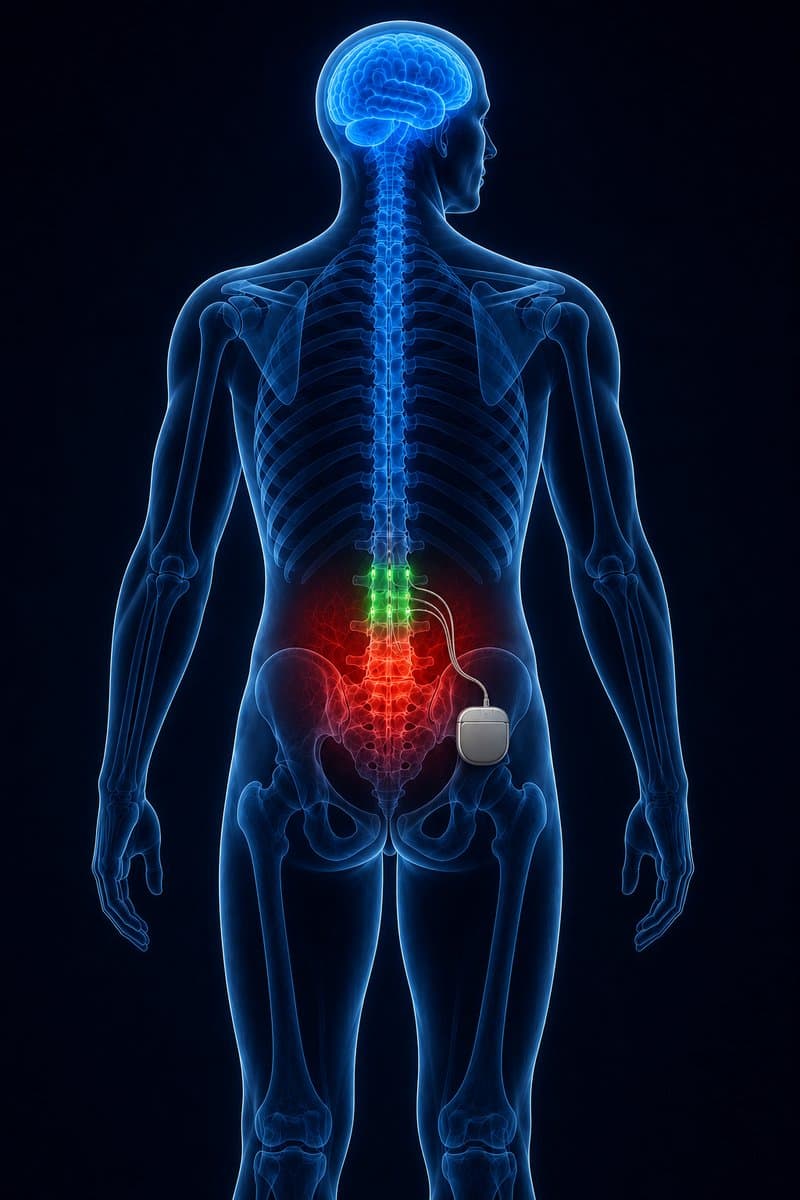
What it involves
Chronic low back pain often involves impaired control of the multifidus muscle — a deep muscle that stabilizes each spinal segment — which can leave the low back mechanically under-supported even after the original injury has settled. A small device is implanted near the spine, connected to leads positioned at the medial branch nerve, which controls the multifidus directly.
Unlike spinal cord stimulation, this device isn't used continuously to block pain signals. Instead, patients activate it for short, scheduled sessions — typically twice a day for about 30 minutes — during which it stimulates the nerve to contract the multifidus muscle, similar in concept to targeted physical therapy delivered directly at the nerve level.
How it works
Repeated, programmed contraction of the multifidus over months aims to retrain the muscle's stabilizing function — addressing the underlying neuromuscular deficit contributing to chronic mechanical low back pain, rather than modulating the pain signal itself. This is a fundamentally different approach than traditional spinal cord or peripheral nerve stimulation, which work by interrupting pain signaling continuously.
Because the goal is restoring function rather than masking symptoms, benefit typically builds gradually over the course of treatment as the muscle's control improves, rather than providing the kind of immediate, adjustable relief a traditional stimulator offers.
How We Build Your Plan
The clinical reasoning behind this recommendation
What's the diagnosis?
Chronic mechanical low back pain, generally present for a year or more, in a patient who has completed but not adequately benefited from physical therapy — with multifidus dysfunction as a likely contributor to ongoing instability.
What's the mechanism?
Scheduled electrical stimulation of the medial branch nerve controlling the multifidus muscle triggers repeated, programmed contractions, aiming to retrain the muscle's stabilizing function over months rather than blocking the pain signal directly.
What are the options?
Physical therapy and conservative care remain the foundation; restorative neuromodulation is considered for patients with confirmed chronic mechanical low back pain who've completed conservative care without adequate, lasting benefit, before considering spinal fusion or other more invasive options.
Why this approach?
Because this addresses a specific neuromuscular deficit rather than pain signaling broadly, Dr. Foster considers it for patients whose low back pain appears to be driven by impaired muscular control — a mechanism this device is specifically designed to address.
What are the tradeoffs?
Restorative neuromodulation requires an implanted device and a real time commitment to scheduled daily sessions over months before benefit fully builds, but it targets the underlying neuromuscular problem directly rather than simply managing symptoms around it, which is meaningfully different from traditional pain-blocking neuromodulation.
What to Expect
An implant, then months of scheduled daily sessions
Implantation is a same-day outpatient procedure, typically taking around an hour, done under light sedation. Recovery from the implant itself is brief, with most patients returning to normal activity within a couple of weeks.
The real commitment comes after: two scheduled sessions a day, about 30 minutes each, using an external remote to activate the programmed stimulation. Because the goal is retraining muscle function rather than providing immediate relief, meaningful improvement typically builds gradually over three to six months of consistent use.
Conditions This Treats
Conditions this treatment addresses
For more information about ReActiv8, visit the manufacturer's official resource: Mainstay Medical ReActiv8.
Completed physical therapy but still dealing with chronic low back pain?
An accurate diagnosis starts with a conversation. Reach out to schedule a consultation.