
Conditions · Spine & Disc
Low Back Pain
"Low back pain" describes where it hurts, not what's actually causing it. It's a condition too often managed with a one-size-fits-all approach — Dr. Foster takes the time to identify the specific pain generator behind your symptoms, because that's what actually determines the right treatment plan.
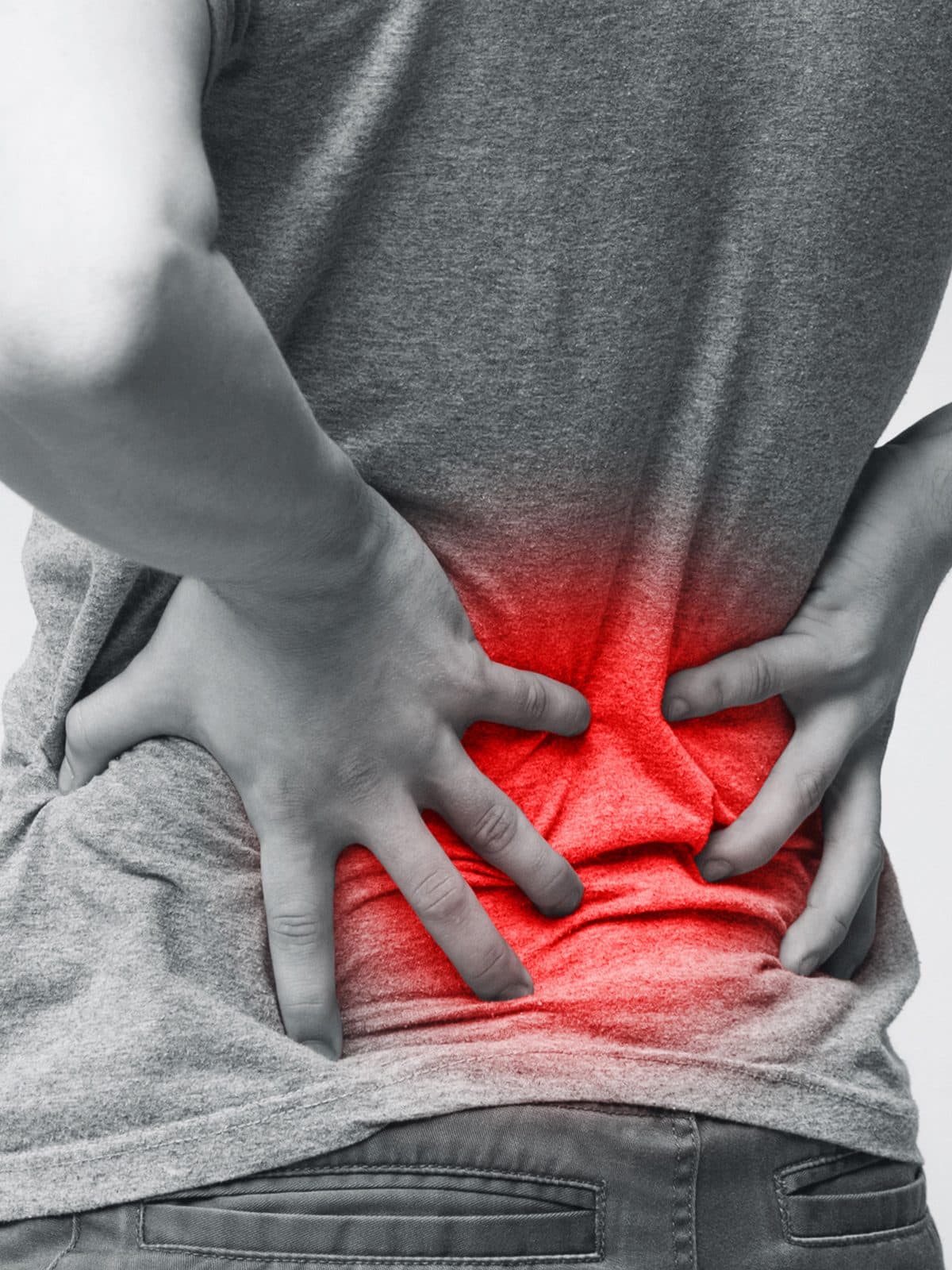
Understanding Low Back Pain
The lower back is a crowded neighborhood of potential pain generators: the facet joints that stabilize each spinal segment, the intervertebral discs that cushion them, the vertebral endplates and basivertebral nerve running through each vertebra, the sacroiliac joints connecting the spine to the pelvis, and the nerve roots that can refer pain down the leg when compressed or irritated. Muscular strain and deconditioning can contribute as well, particularly early on or after a specific injury.
Imaging alone often can't tell these apart — it's common to see disc degeneration, facet arthropathy, and other findings all present on the same MRI, none of which may be the actual source of a given patient's pain. That's why Dr. Foster's evaluation leans heavily on history, exam, and, when needed, diagnostic injections to confirm which structure is actually generating the symptoms — rather than treating whatever finding happens to be most visible on a scan.
Narrowing It Down
Five common, more specific diagnoses
Once the evaluation points to a likely pain generator, care shifts to one of these more specific conditions — each with its own dedicated care pathway.
Facet Joint Syndrome
A deep, localized ache that worsens with extension and rotation — from the small joints that stabilize the spine.
Learn more →Discogenic Pain
Pain originating from a degenerated or injured disc itself, often worse with sitting or forward bending.
Learn more →Vertebrogenic Pain
Chronic low back pain driven by the vertebral endplate and basivertebral nerve, distinct from disc or facet pain.
Learn more →Sacroiliac Joint (SI Joint) Dysfunction
Low back and buttock pain from the sacroiliac joint, frequently mistaken for disc or nerve pathology.
Learn more →Radiculopathy / Sciatica
Pain, numbness, or weakness radiating down the leg from an irritated or compressed nerve root.
Learn more →Care Pathway
How treatment typically progresses
Start with Conservative Care
Medications
Physical Therapy & Exercise
Activity & Behavior Modifications
If Conservative Care Isn't Enough
Diagnostic Evaluation
Epidural Steroid Injections
Medial Branch Blocks & Radiofrequency Ablation
This page covers the general shape of the care pathway. Once a specific pain generator is identified, the plan moves to that condition's dedicated pathway — see the diagnoses above for the full, condition-specific detail.
How We Build Your Plan
The clinical reasoning behind this recommendation
What's the diagnosis?
A detailed history and exam aimed at localizing the pain — its pattern, what aggravates and relieves it, and any radiating or neurological symptoms — correlated with imaging, and confirmed with diagnostic injections when the picture is ambiguous.
What's the mechanism?
Low back pain isn't a single mechanism — it's a final common symptom that can arise from the facet joints, the disc, the vertebral endplate, the SI joint, a nerve root, or surrounding soft tissue, each requiring a different primary treatment approach.
What are the options?
Conservative care for most initial presentations, then a diagnostic process to localize the specific pain generator, followed by a targeted interventional option — like epidural steroid injections or medial branch blocks and RFA — matched to that specific diagnosis.
Why this approach?
Because imaging findings are often nonspecific and don't reliably point to a single cause, Dr. Foster prioritizes a careful diagnostic process over treating whatever shows up most prominently on a scan — matching the treatment to the actual pain generator, not just the location of the pain.
What are the tradeoffs?
Skipping straight to a generic treatment can provide some relief, but it risks missing the actual source of the problem, which shows up as recurrence or incomplete relief. Taking the time to localize the pain generator first takes a bit longer up front but leads to a plan that's far more likely to actually work.
Prognosis
Highly variable — and largely dependent on getting the diagnosis right
Outcomes for low back pain vary enormously depending on the underlying cause, which is exactly why lumping all low back pain together tends to produce inconsistent results. Some causes — like acute muscular strain or early radiculopathy — often resolve substantially with conservative care alone. Others, like facet joint syndrome, discogenic pain, or vertebrogenic pain, tend to be more chronic and benefit from a targeted, diagnosis-specific treatment plan. The single biggest factor in a good outcome is identifying which of these is actually happening before committing to a treatment course.
Related Treatments
Treatment options for this condition
Sources & Further Reading⌄
- Chiarotto A, Koes BW. "Nonspecific Low Back Pain." N Engl J Med. 2022;386(18):1732-1740. This current review confirms a meaningful share of low back pain presentations don't map neatly to a single structural cause on imaging alone, which is why a careful history and exam — not just an MRI — are central to narrowing down the actual pain generator. View source →
Ready to find out what's actually causing your pain?
An accurate diagnosis starts with a conversation. Reach out to schedule a consultation.