
Conditions · Post-Surgical
Failed Back Surgery Syndrome / Post-Laminectomy Syndrome
Persistent or recurrent pain after spine surgery affects a meaningful share of patients, and it calls for a careful re-evaluation — the cause of ongoing pain isn't always the same problem the original surgery addressed.
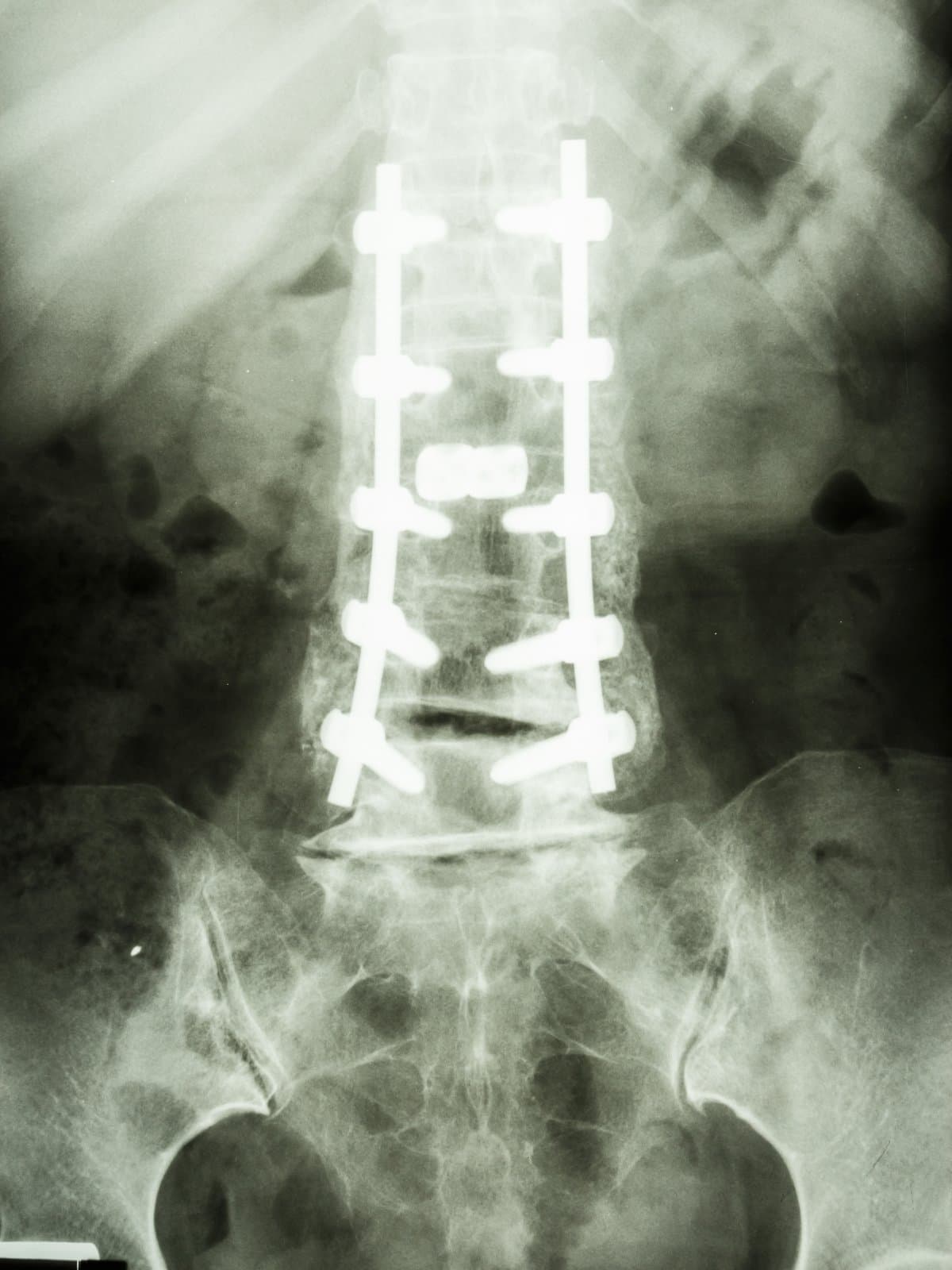
Understanding Failed Back Surgery Syndrome
The causes behind ongoing pain after spine surgery are varied: epidural scar tissue (fibrosis) irritating a nerve root, a recurrent or new disc herniation, adjacent segment breakdown (extra stress on the levels next to a fusion), hardware-related pain, incomplete decompression, or a new pain generator — like a facet or SI joint problem — that the original surgery was never designed to address.
Because the possible causes are so varied, the most important step is treating this as a fresh evaluation rather than assuming the pain is "just scar tissue" or the same problem as before.
This isn't limited to the lumbar spine — the same picture shows up after cervical spine surgery. Failed neck surgery syndrome follows the same pattern: persistent or recurrent neck and arm pain after a cervical decompression or fusion, arising from epidural fibrosis, adjacent segment breakdown, hardware-related pain, or a new pain generator the original surgery wasn't designed to address. It calls for the same careful, fresh re-evaluation as the lumbar picture.
Care Pathway
How treatment typically progresses
Start with Conservative Care
Medications
Physical Therapy & Exercise
Activity & Behavior Modifications
If Conservative Care Isn't Enough
Epidural Steroid Injections
Spinal Cord Stimulation (SCS)
Peripheral Nerve Stimulation
Because repeat spine surgery has a track record of diminishing returns with each subsequent operation, Dr. Foster looks first for interventional and neuromodulation options that can meaningfully help without another operation, reserving surgical revision for clearly correctable structural problems.
How We Build Your Plan
The clinical reasoning behind this recommendation
What's the diagnosis?
A careful review of the original surgery and imaging, a fresh MRI — sometimes with contrast to distinguish scar tissue from recurrent disc herniation — and a diagnostic workup that treats the patient as a new evaluation rather than assuming the same pain generator as before.
What's the mechanism?
Several distinct mechanisms can drive pain after spine surgery: epidural fibrosis irritating a nerve root, recurrent or new disc herniation, adjacent segment breakdown, hardware complications, or an undiagnosed secondary pain generator — like the facet or SI joint — that was never the surgical target.
What are the options?
Conservative care and pain-focused rehabilitation, epidural steroid injections for perineural fibrosis or inflammation, and — for more refractory, chronic post-surgical nerve pain — spinal cord stimulation or peripheral nerve stimulation, which are specifically well-suited to this population.
Why this approach?
Because repeat surgery for failed back surgery syndrome has diminishing returns with each subsequent operation, Dr. Foster looks first for interventional and neuromodulation options that can meaningfully help without another surgery, reserving revision for clearly correctable structural problems.
What are the tradeoffs?
Spinal cord stimulation and peripheral nerve stimulation are bigger steps than an injection but have some of the strongest evidence in interventional pain medicine specifically for this population. Both are reversible — the device can be removed — but require an implant and ongoing management.
Prognosis
A harder population to treat — but one with tools built specifically for it
This is honestly a more difficult group to treat, given the altered anatomy and the range of possible pain generators after surgery. But there's real reason for optimism: a genuine subset of patients get substantial, durable relief from spinal cord stimulation and peripheral nerve stimulation — treatments that were developed and validated largely in this exact population. This isn't a generic tool being applied here; it's one built and tested specifically for this problem.
Related Treatments
Treatment options for this condition
Sources & Further Reading⌄
- "Failed Back Surgery Syndrome." StatPearls [Internet]. NCBI Bookshelf, updated 2023. Published outcomes data confirm that increasing numbers of revision spine surgeries are associated with a progressively lower chance of successful pain relief, which is why interventional and neuromodulation options are generally favored over routine repeat surgery for failed back surgery syndrome. View source →
- Kumar K, Taylor RS, Jacques L, et al. "Spinal cord stimulation versus conventional medical management for neuropathic pain: a multicentre randomised controlled trial in patients with failed back surgery syndrome." Pain. 2007;132(1-2):179-188 (the PROCESS trial). This pivotal RCT — conducted specifically in failed back surgery syndrome patients — remains among the strongest clinical trial evidence in interventional pain medicine for this population. View source →
- Kurt E, Noordhof RK, van Dongen R, Vissers K, Henssen D, Engels Y. "Spinal Cord Stimulation in Failed Back Surgery Syndrome: An Integrative Review of Quantitative and Qualitative Studies." Neuromodulation. 2022;25(5):657-670. This more recent integrative review corroborates the PROCESS trial's findings, confirming SCS's continued strong evidence base specifically for this patient population. View source →
- Passavanti Z, Leschka S, Wildermuth S, Forster T, Dietrich TJ. "Differentiating epidural fibrosis from disc herniation on contrast-enhanced and unenhanced MRI in the postoperative lumbar spine." Skeletal Radiol. 2020;49(11):1819-1827. This current study confirms contrast-enhanced MRI can distinguish epidural scar tissue (fibrosis) from a recurrent disc herniation in patients with new or persistent pain after spine surgery, guiding which treatment approach is likely to help. View source →
Think this might describe your pain?
An accurate diagnosis starts with a conversation. Reach out to schedule a consultation.