
Treatments · Radiofrequency & Nerve Ablation
Medial Branch Blocks (MBB) & Radiofrequency Ablation (RFA)
A two-step approach to facet joint pain: a diagnostic block first confirms the facet joint as the actual source, then radiofrequency ablation disables the small nerves carrying that pain signal for extended, often long-lasting relief.
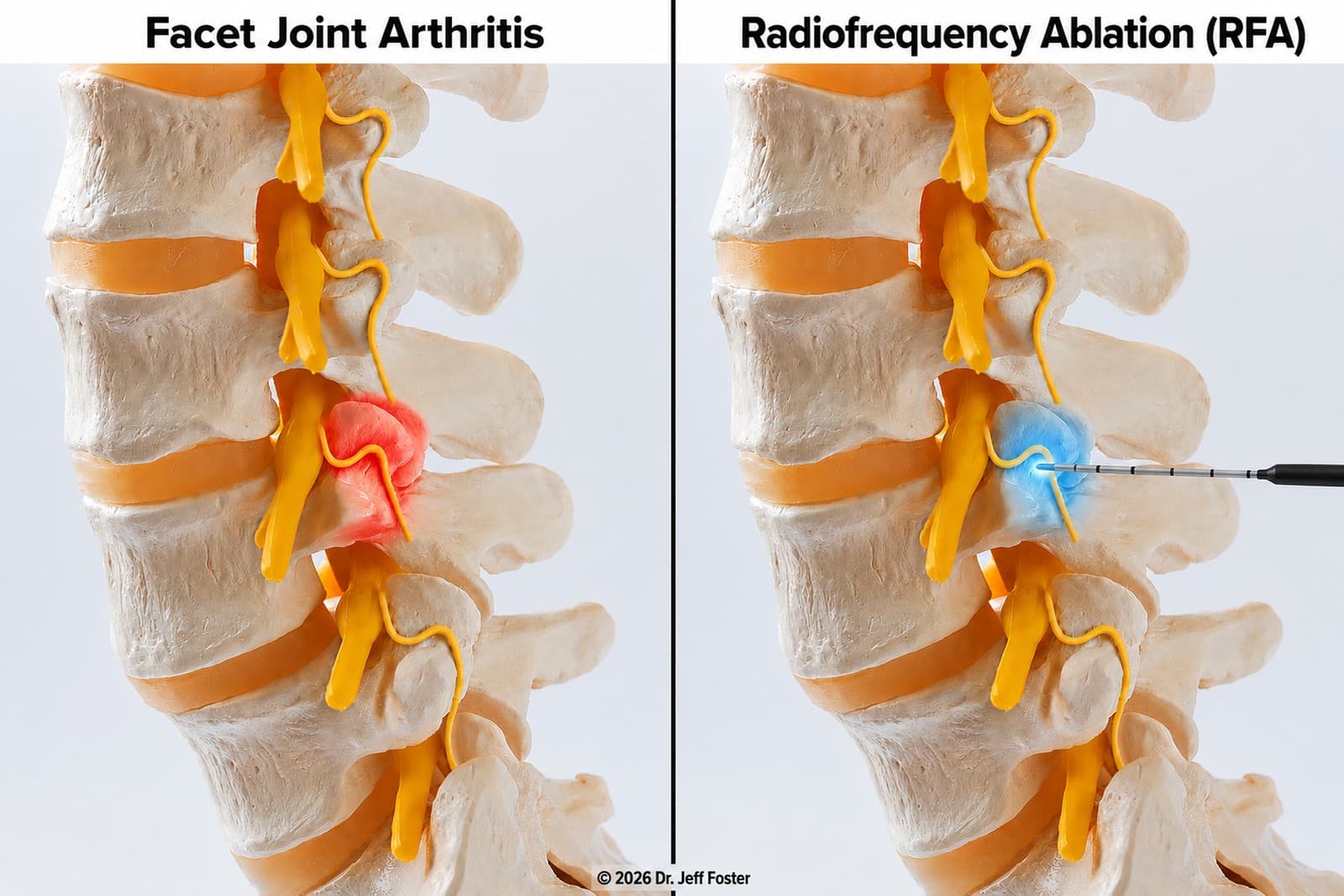
What it involves
Each facet joint in the spine is supplied by small sensory nerves called medial branches. A medial branch block numbs these nerves with local anesthetic, under fluoroscopic guidance, at the specific spinal level suspected of causing pain. If a patient's pain resolves — or improves substantially — during the anesthetic's effect, that confirms the facet joint as the actual pain generator, not just a bystander finding on imaging.
Once that's confirmed — typically with two separate positive blocks, on different days, to guard against a placebo response — radiofrequency ablation targets the same medial branch nerves with heat generated by radiofrequency energy, disabling their ability to carry the pain signal for much longer than the diagnostic block alone.
How it works
The diagnostic block and the ablation are deliberately separate steps, not one combined procedure. The block answers a single question — is this specific facet joint actually the pain generator — before committing to the more durable intervention. That sequencing matters: ablating the wrong nerve provides no relief and delays finding the actual answer.
Once confirmed, radiofrequency ablation of the same medial branch nerves interrupts their ability to transmit pain signals for a period of months, considerably longer than the hours of relief a diagnostic block provides. Because the treated nerves can gradually regenerate over time, relief isn't always permanent — but the procedure can be repeated when the same joint is reconfirmed as the pain source.
How We Build Your Plan
The clinical reasoning behind this recommendation
What's the diagnosis?
A physical exam showing pain reproduced with spinal extension and rotation at a specific level, confirmed — not assumed — by a positive diagnostic medial branch block, since facet degeneration on imaging alone doesn't prove it's the source of a given patient's pain.
What's the mechanism?
Radiofrequency energy delivered through a needle positioned directly along the confirmed medial branch nerve disables its ability to transmit pain signals, providing meaningfully longer relief than the temporary anesthetic effect of a block alone.
What are the options?
A single diagnostic block, a confirmatory second block on a separate day for added certainty, and radiofrequency ablation once the facet joint is clearly confirmed as the pain generator — each step building on the one before it rather than skipping ahead.
Why this approach?
Dr. Foster moves to ablation only after the diagnostic block confirms the specific joint responsible, ensuring the more durable procedure is applied precisely where it's likely to work rather than as a broader, less targeted intervention.
What are the tradeoffs?
The diagnostic block is low-risk and answers a specific question, but its relief is measured in hours, not months. Ablation offers meaningfully longer relief — but nerves can regenerate over time, so relief isn't always permanent, and the procedure can be repeated when needed.
What to Expect
A Quick, Minimally Invasive Procedure
The diagnostic medial branch block itself typically takes about 5 minutes, done under fluoroscopic guidance on an outpatient basis. Patients track how much their usual pain improves over the next few hours while the anesthetic is active — that window is what confirms the diagnosis.
If the block (or blocks) confirm the joint as the pain source, radiofrequency ablation follows as a separate visit. The ablation itself typically takes about 15 minutes, also outpatient and image-guided. Mild soreness at the needle sites is common for a few days, and meaningful relief typically builds over one to three weeks as the nerve settles, often lasting many months before it would need to be repeated.
Conditions This Treats
Conditions this treatment addresses
Think facet joint pain might describe your symptoms?
An accurate diagnosis starts with a conversation. Reach out to schedule a consultation.