
Treatments · Soft Tissue & Regenerative Medicine
Platelet-Rich Plasma (PRP)
A concentration of a patient's own platelets and growth factors, injected directly into an injured tendon, joint, or ligament to support the body's natural healing process.
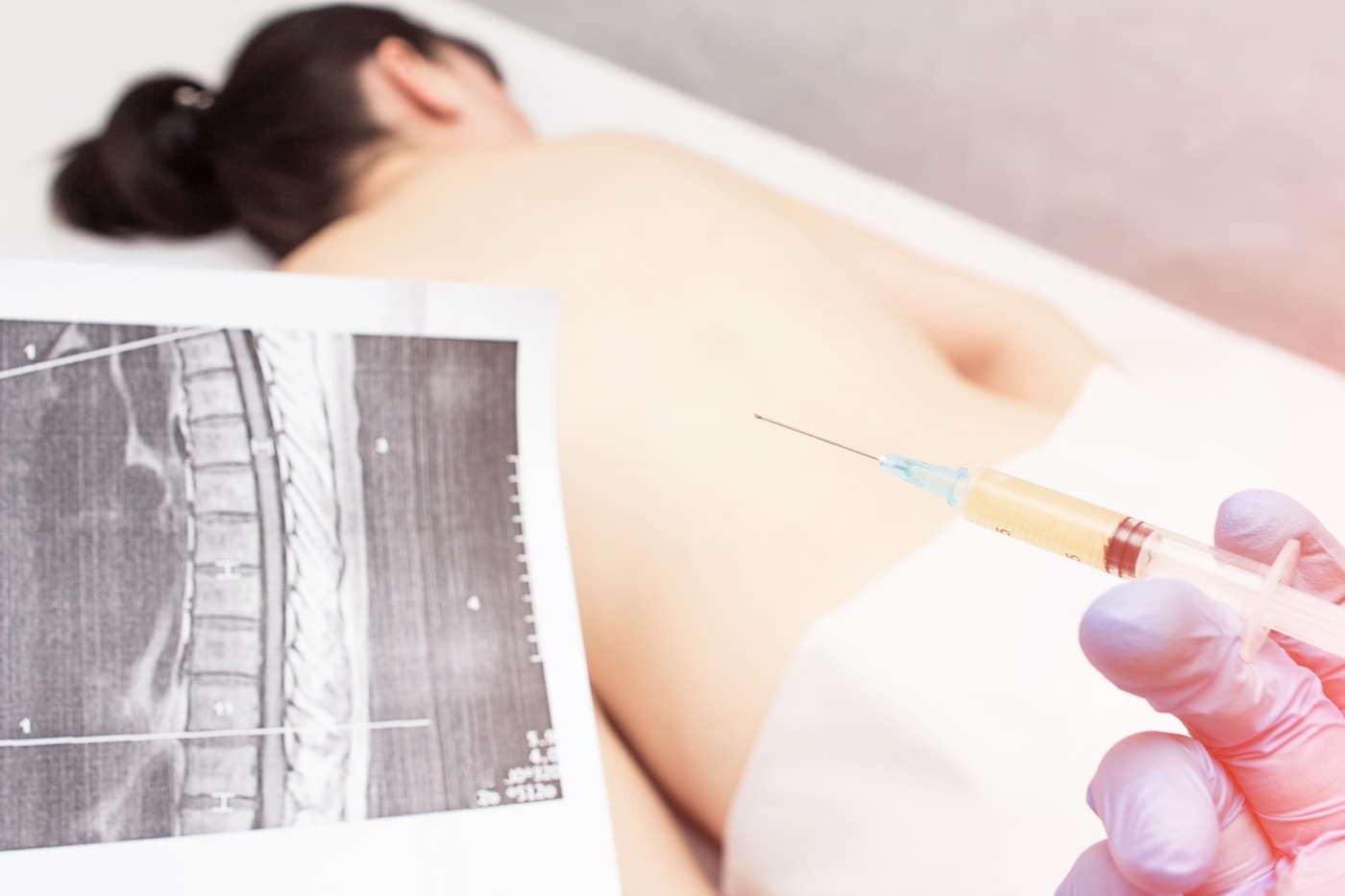
What it involves
A small sample of the patient's own blood is drawn and spun in a centrifuge to concentrate the platelets — cells that carry growth factors involved in tissue repair — separating them from the rest of the blood. That concentrated platelet plasma is then injected, under ultrasound or fluoroscopic guidance, directly into the specific tendon, joint, or ligament that's been identified as the pain generator.
Because the injection uses the patient's own blood, there's no risk of an allergic or rejection reaction — the entire process happens in a single office visit, from the initial draw to the final injection.
How it works
The growth factors concentrated in PRP are involved in the body's natural tissue repair process — recruiting the cells responsible for rebuilding tendon, ligament, or joint tissue and supporting the formation of new, organized tissue rather than the disorganized scar tissue that chronic overuse injuries often develop. This is a fundamentally different mechanism than an injection aimed at blocking a pain signal: PRP is aimed at the tissue itself.
The evidence base is strongest for chronic tendon injuries and knee osteoarthritis, where a meaningful and growing body of research supports its use. For other applications, PRP is offered more selectively, reflecting where the evidence is genuinely strongest rather than treating it as a universal option.
How We Build Your Plan
The clinical reasoning behind this recommendation
What's the diagnosis?
A confirmed tendon, joint, or ligament injury that hasn't responded adequately to conservative care — physical therapy, activity modification, and, where appropriate, a corticosteroid injection.
What's the mechanism?
Concentrated growth factors from the patient's own platelets support the body's natural tissue repair process, recruiting the cells responsible for rebuilding tendon, ligament, or joint tissue rather than simply blocking the pain signal coming from it.
What are the options?
PRP is generally considered after — or sometimes alongside — conservative care, and before more invasive procedures like Tenex or surgical referral, particularly for patients wanting to support tissue healing directly rather than only manage symptoms.
Why this approach?
Because PRP uses the patient's own blood, it carries a favorable safety profile, which is part of why Dr. Foster considers it earlier in the progression for appropriately selected patients — particularly for knee osteoarthritis and chronic tendon injuries, where the evidence is strongest.
What are the tradeoffs?
PRP requires realistic expectations: it's not a guaranteed fix, results vary by patient and by the specific tissue being treated, and it's generally not covered by insurance. But it carries minimal risk and can be a reasonable option for patients who want to support healing directly rather than only manage symptoms around an unresolved injury.
What to Expect
A single-visit procedure with a gradual response
The full process — blood draw, processing, and injection — typically takes about 30 to 45 minutes in a single office visit. The injection itself, once the platelet concentrate is prepared, takes only a few minutes.
Unlike a corticosteroid injection, PRP doesn't provide immediate relief — because it's supporting a biological repair process rather than blocking pain directly, it's common for soreness to temporarily increase for a few days before gradual improvement builds over several weeks to a few months. Some patients benefit from a repeat injection depending on the tissue treated and the initial response.
Conditions This Treats
Conditions this treatment addresses
Radiculopathy / Sciatica
An option some patients consider for nerve-related inflammation contributing to sciatica, though the evidence here is less established than for epidural steroid injections.
Learn more →Sacroiliac Joint (SI Joint) Dysfunction
Learn more →Facet Joint Syndrome
Learn more →Discogenic Pain
Learn more →Joint Arthritis
Learn more →Tendinopathy
Learn more →Dealing with a tendon or joint injury that hasn't fully resolved?
An accurate diagnosis starts with a conversation. Reach out to schedule a consultation.